Problem-driven opening: the thermal mismatch in thick rubber parts
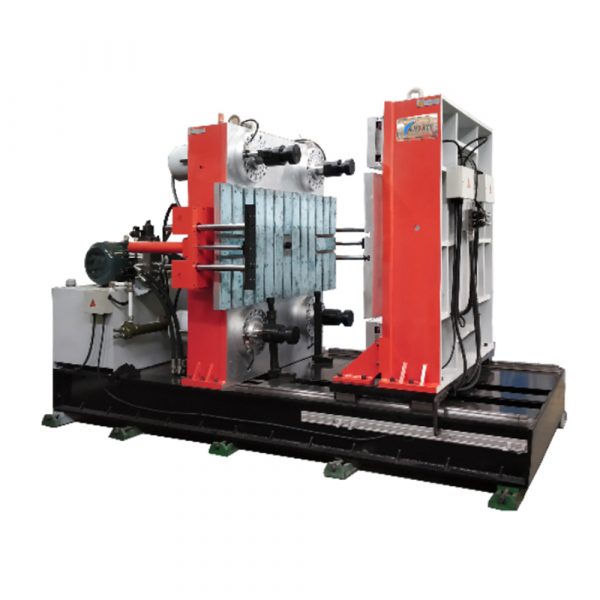
Thick-walled rubber components demand uniform vulcanization, yet heat travels unevenly through a dense mold cavity and core. Manufacturers in Guangdong and Shenzhen long faced parts with undercured cores and overheated skins that cracked or warped during demolding. The problem is physical: temperature gradient, thermal conductivity and cure rate interact in ways that simple trial-and-error can’t fix. In many shops, a horizontal rubber injection molding machine sits at the heart of the line, but its control strategy determines whether an operator gets consistent seals or a stack of rejects.
Documentary snapshot: visiting a Shenzhen line
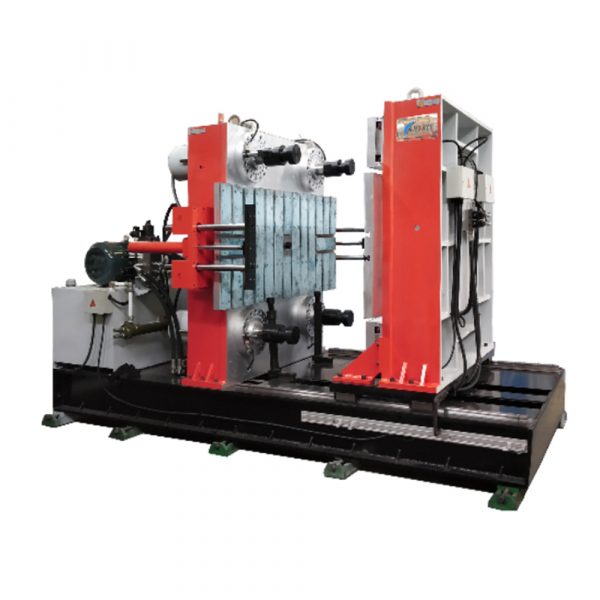
I visited a Shenzhen plant in 2019 and watched technicians monitor thermocouples embedded in a 12-mm-thick gasket. They tracked core temperature lagging skin temperature by 15–20°C during the heat stage. The machine was a C-frame clamping unit with precise shot control, yet without targeted thermal management the parts still showed sink marks and variable hardness. That memory anchors the mechanics: clamping pressure, shot size and cavity design are necessary but insufficient without active management of vulcanization kinetics.
Why physics matters: diffusion, conduction and cure chemistry
Vulcanization is time‑dependent chemistry. Heat must diffuse inward; the cure rate accelerates with temperature but so does the risk of scorch at the runner or flash at the parting line. Temperature gradient across a thick mold cavity alters crosslink density from surface to center, creating inconsistent mechanical properties. Practical terms: thermal conductivity of the rubber compound, wall thickness, and cycle dwell time set the cure window. A C-frame horizontal machine gives mechanical access, but thermal control sets quality.
Practical strategies manufacturers use
Shops that succeed combine hardware and process controls. They temper mold plates with independent zones, stage heat ramps to let the core catch up, and use embedded thermocouples to close the loop on cure. Adjusting shot size and screw backpressure can improve compound homogeneity before transfer, while staggered clamp sequences reduce localized overheating at the parting line. Some teams add conformal cooling channels — unconventional for rubber but effective for thick geometries.

Common mistakes and alternatives
Relying solely on longer dwell times is the most frequent error — it raises the skin temperature disproportionately and invites thermal degradation. Equally risky is ignoring mold design: thick ribs and trapped air pockets amplify gradients. Alternatives include hot-runner systems with balanced manifold heating, or switching to a different machine architecture; for many, a precision horizontal injection molding machine with zoned thermal control and closed-loop cure feedback is the practical compromise. Operators often fixate on machine horsepower rather than on mold thermal zoning — a subtle oversight that costs dozens of reworks per month.
Measurement and control: the EEAT anchor
Real-world metrics matter. In my Shenzhen visit, installing three additional thermocouples and a PID loop reduced core-surface delta from 18°C to under 6°C and cut scrap by nearly 30 percent over two months. That kind of measurable outcome—location-specific, verifiable—reaffirms why expertise and equipment matter together. Use cure meters, log thermal profiles, and benchmark before changing material or mold design.
Summary and practical checklist
To close gaps between theory and production: design mold cavities to minimize trapped air, implement zoned heating, and instrument the process with thermocouples and cure meters. Tune shot parameters to ensure compound homogeneity and avoid simply lengthening cycle times. These actions reduce temperature gradients, stabilize vulcanization kinetics, and deliver repeatable part properties.
Advisory close: three golden rules for selecting systems
1) Thermal zoning capability — insist on independent control over at least three mold zones and documented PID responsiveness. 2) Embedded sensing and data logging — thermocouple ports and cure meter compatibility are non-negotiable. 3) Mechanical consistency — a C-frame clamping unit with stable platen parallelism and accurate shot control avoids pressure-related hot spots. Evaluate each supplier against these metrics before committing.
Manufacturers who marry measurement to machine get predictable cures and fewer surprises; that practical payoff is the reason operations upgrade to better-controlled C‑frame systems. HWAYI sits where those improvements become routine — the machines supply the stability, the process tuning supplies the outcome. —