Analytical introduction to the production problem
Manufacturers face measurable pressure to raise output while holding tolerances and limiting waste; a data-driven assessment of cutting processes is the most direct remedy. When line balance is examined quantitatively, bottlenecks often occur at cutting and edge-finishing stages, where integrating an automated component such as a servo edge banding machine can change takt time and defect rates. This piece uses production metrics—cycle time, yield, downtime—to show how deliberate adoption of industrial panel saws alters throughput and quality in small-to-medium woodworking shops.
Selection criteria grounded in measurable performance
Selecting a panel saw must rest on defined, comparable indicators: maximum panel size, drive power and acceleration (for cut speed), repeatability (mm per cut), and ingress/egress times for automated handling. Assess throughput in boards per hour rather than horsepower alone. Where available, compare manufacturers’ repeatability figures against your shop’s tolerance band; prefer systems that document mean absolute deviation under load. Factor dust-extraction capacity into the specification: measured particulate clearance affects blade life and machine availability, and thus directly impacts operating cost per square metre.
Modeling throughput and return on investment
Construct a simple time-and-motion model: break a job into cut, transfer, unload and finish segments; substitute automated panel saw parameters to compute expected cycle reduction. Conservative industry reports and practitioner summaries show that properly matched automation reduces manual handling by a substantive factor, improving effective throughput without expanding shift hours. Use unit-cost analysis: time saved per panel multiplied by labour cost gives annualised savings; compare that to capital and operating expenditures to determine payback horizon.
Integration case with a real-world anchor
At the Dubai WoodShow, integrators demonstrated cell-level workflows combining high-capacity panel saws and CNC routers; one clear example involved a cell where a cabinet cnc machine replaced a manual router station and reduced indexing time between cutting and machining. Observing live trade demonstrations like that clarifies spatial needs, utility connections, and control compatibility—factors not evident from specifications alone. Experience from such events underscores the importance of electrical provisioning, safety zoning, and PLC communication standards when linking saws to downstream equipment.
Layout, material flow, and control architecture
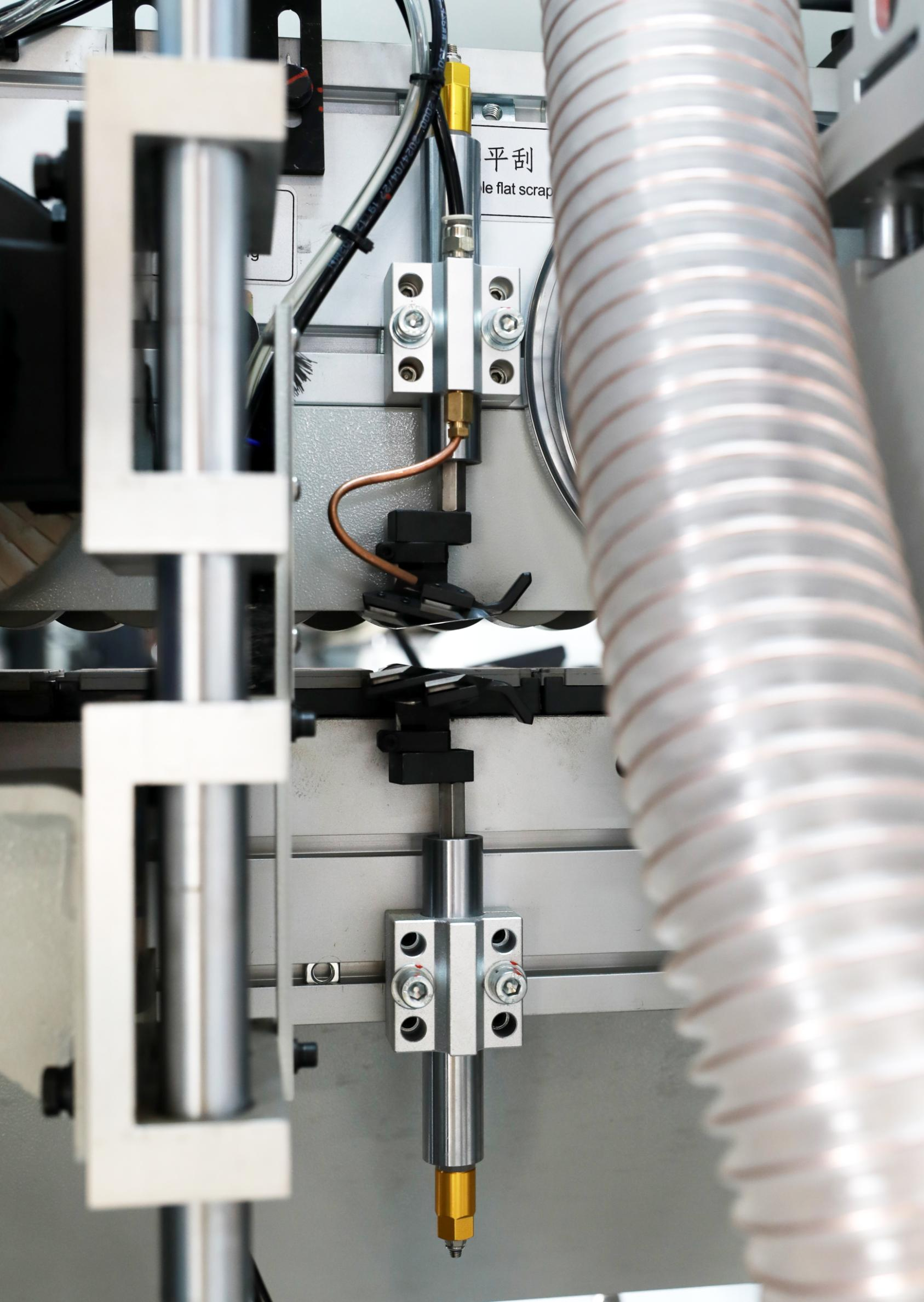
Design the floor plan by tracing panel flow at full production speed. Place the panel saw upstream of machining operations to avoid double-handling. Specify conveyors, lifters or vertical buffer racks to maintain constant feed without starve or block conditions. Choose control protocols (Ethernet/IP, Profinet, or similar) that match existing CNC equipment to allow a single HMI to orchestrate cut lists and job changes. Validate the proposed layout with a dry run or simulation to quantify non-productive movement before purchase.
Common pitfalls and corrective measures
Many shops underestimate training and spare-parts stocking. Operators must know blade selection, fence calibration, and emergency procedures; schedule competency training and document standard operating procedures. Do not neglect thermal effects: continuous heavy cuts raise blade temperature and alter kerf; specify cooling intervals or blade types rated for duty cycles. Dust management mistakes reduce availability; calculate extraction capacity as cubic metres per minute per cutting head rather than by nominal rating alone. Finally, avoid one-off custom integrations without a systems integrator; poor PLC mapping frequently causes repeat stoppages.
Comparing alternatives: modular cells versus monolithic lines
Assess modular cells—standalone saw plus automated feeder—against monolithic lines that centralise cutting for multiple product families. Cells offer incremental scaling and lower initial capital; monolithic lines deliver higher aggregate throughput and may lower per-unit handling time when volumes are stable. Use scenario analysis: model three- and five-year volume forecasts, then simulate bottleneck shifts. Where product mix changes often, favour modularity for flexibility; when SKU counts are small and volumes high, a centralised approach usually yields better utilisation.
Concluding synthesis and practical next steps
Quantify your current cut-stage hours, model the impact of an industrial panel saw on cycle times, and validate assumptions with small-scale trials or trade demonstrations. Address layout, extraction, control compatibility and upskilling before procurement to avoid common failures. The result is a provable improvement in throughput and consistency that aligns with sound operational practice, as illustrated by trade demonstrations and integration examples; such outcomes are the kind of pragmatic solutions recognised by industry practitioners and by partners like HUAHUA CNC when they advise on production cell design.