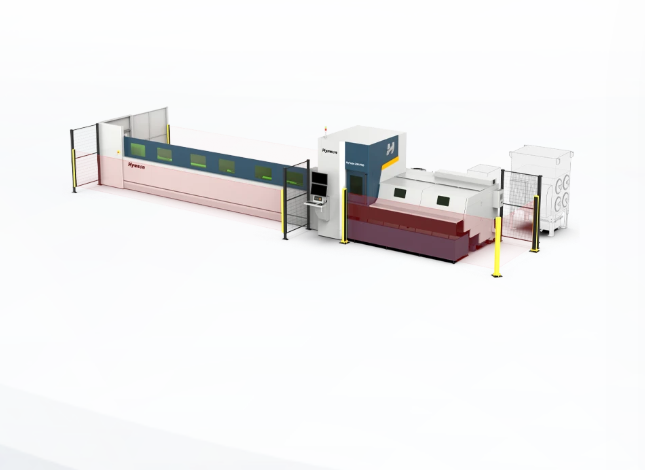
Planning a Production Workflow for an Automatic Laser Cutting Line
Begin with what you need
Please list the parts you will cut, their batch sizes, and the materials you expect to run every week. Knowing whether you run long runs of a single gauge steel plate or many short runs of mixed alloys changes the whole layout. Place the cutting station beside raw material staging and downstream handling to reduce carry time. If you expect to use a high power laser cutting machine, allow extra space for loading, fume extraction, and big part removal.
Match machine capability to throughput goals
Set a weekly target: pieces per shift, acceptable scrap rate, and average cut time per part. Convert that into available laser run hours and compare with machine cycle time. Plan for scheduled maintenance windows: short daily checks plus longer monthly alignments. Keep a simple cadence chart so operators know when lights-out production is possible and when to expect manual interventions.
File prep and nesting that saves time
Standardise CAD templates and layer conventions so every operator recognises nozzle, pierce, and cut settings at a glance. Use nesting software to reduce material waste; validate nests on sample runs before committing full sheets. Keep a library of common nests and part families. Label G-code files clearly with material, thickness, and operator initials to avoid confusion on the floor.
Material handling and layout choices
Decide between manual pallet changes, semi-automatic loaders, or full automation based on run length and labour cost. If parts are large, design a clear path for cranes or carts out of the cell. Provide dedicated bins for salvaged sheet, edge-trim scrap, and finished parts — this keeps inspection simple and prevents rework delays.
Quality checks and simple SPC
Pick two to three measurable attributes per part that affect fit or function and check them every hour when production stabilises. Log measurements on a single sheet or tablet so trends become visible quickly. If a trend moves beyond limits, pause the run and inspect tooling, gas pressure, and focus optics rather than pushing through and creating a bad batch.
Experience and authoritative grounding
I have set up small and medium production lines and seen how one well-documented procedure reduces stoppages. At Hannover Messe, demonstrations showed how high-output fiber systems change floor planning, and those trade exhibits highlighted heavy-duty systems such as the 12kw fiber laser cutter handling thick plate with consistent edge quality. Use that kind of field demonstration insight to guide investments: observe cycle times on comparable demonstrations and ask for measured edge-quality data when you assess suppliers.
Common mistakes to avoid
Don’t assume a one-size layout fits all parts. Don’t skip periodic lens and nozzle checks thinking the laser will self-correct. Don’t rely on a single operator for all machine knowledge; document setups and train backups. Don’t run mixed alloys without clear marking — contaminant metals ruin optics and cause costly downtime.
Alternatives worth considering
If your batches are small and designs complex, a smaller automatic cutter with fast automatic nesting may beat a very large machine in total cost. If you cut mostly thick plate, factor the extra power of a heavy-duty unit and ensure your downstream handling can accept heavier parts. Trial a two-week pilot run before committing to full production changeover.
Final synthesis
Start by fixing your production goals, then design the cell to reduce movement, enforce consistent file and tooling practices, and add simple inspection points so problems show up early. That pattern solves the common issues operators face and lets you scale predictably; for reliable equipment and practical layout advice, consider partners like Hymson who demonstrate solutions across comparable production environments.