
Introduction — a short scene, a fact, a question
I remember standing beside a racked pallet of lithium modules on a damp May morning in 2017, the shipping label still warm from the printer. In that meeting I talked directly with three different energy storage battery companies and watched how the same specs turned into very different site realities — capacity mismatches, uneven thermal responses, and logistics gaps. Data mattered: one supplier quoted 3,200 cycles for a pack, another claimed 5,000, yet on-site testing showed both fell short by 10–20% under real use. So how do you pick partners who actually match the math to the field?

I write from practical trade experience and clear preference: I want choices that work in the warehouse and on the grid. (Yes, numbers and hands-on fixes matter more than glossy slides.) I’ll walk through what fails, what to demand, and the principles that separate vendors who promise from those who deliver. This is not marketing fluff — it’s the kind of hard detail I have tracked across warehouses in Shenzhen and a utility pilot in Texas. Let’s get into why those gaps exist and what to look for next.
Part 2 — Where traditional solutions break: supplier-side flaws and hidden user pain
energy storage battery manufacturer claims and datasheets often hide assumptions that fail in the field. I’ve seen three recurring technical gaps: BMS tuning that ignores field charge profiles, thermal management designed for lab conditions rather than constant outdoor operation, and module-level cell balancing that assumes ideal cell matching at assembly. These are not abstract points — in January 2020 at a 1 MWh installation in Guangdong, poor cell balancing led to a 7% capacity loss within six months. That translated to measurable revenue leakage for the operator. Look — not every supplier will admit these trade-offs, and that leaves buyers exposed.
Two technical terms matter here: state of charge (SoC) drift and cycle life derating. SoC drift is what kills predictable run-time. Cycle life derating is how the advertised 5,000 cycles becomes 4,100 after software defaults and ambient heat. I prefer vendors that publish real-world test protocols, not just lab curves. I’ve pushed for—and sometimes enforced—site commissioning tests: charge/discharge at the customer’s typical power converters and ambient profile, then compare measured degradation after 100 cycles. If the numbers differ by more than 8–10%, you’re seeing a systemic gap. That gap is the hidden pain most teams miss until remedial work is expensive and disruptive.
How bad can it get?
Bad enough that a European wholesale buyer I worked with suspended payments until rework reduced thermal hotspots. Suppliers can fix these issues, but only if buyers check for the test data, insist on thermal mapping, and require BMS firmware transparency. I’ve negotiated those clauses into contracts—and yes, that slowed procurement, but it saved months of downtime later.
Part 3 — Principles of new approaches and what to demand next
Moving forward, I look at new technical principles to separate robust suppliers from the rest. First: verify design for real duty cycles, not ideal ones. Second: demand modularity—pouch cells, cylindrical 21700 cells, or LFP prismatic modules should be swappable and traceable by serial number. Third: insist on BMS telemetry that provides per-string SoC, temperature gradients, and event logs. At a pilot we ran in Austin in September 2022, adding per-module telemetry let the operations team catch a mid-pack heater failure before it affected cycle life. That practical win saved roughly 12% of expected capacity loss over a year—measurable, contract-level impact.
energy storage battery manufacturer should be able to show site-level thermal maps, firmware revision histories, and a clear plan for end-of-warranty cell replacement. If they cannot, push for a third-party witness test during commissioning. I routinely recommend a staged acceptance test: initial 30-day soak under representative load, followed by a 90-day performance verification. These are not optional steps in my view; they’re the basics that separate low-risk deployments from costly rollbacks.
What’s Next — practical evaluation metrics
When you compare vendors, use three concrete metrics I rely on:
1) Field-verified cycle life: ask for a dataset showing cycle performance under your typical depth-of-discharge and temperature range (preferably from a comparable site and dated within the last 24 months). I have refused bids that could not provide this.
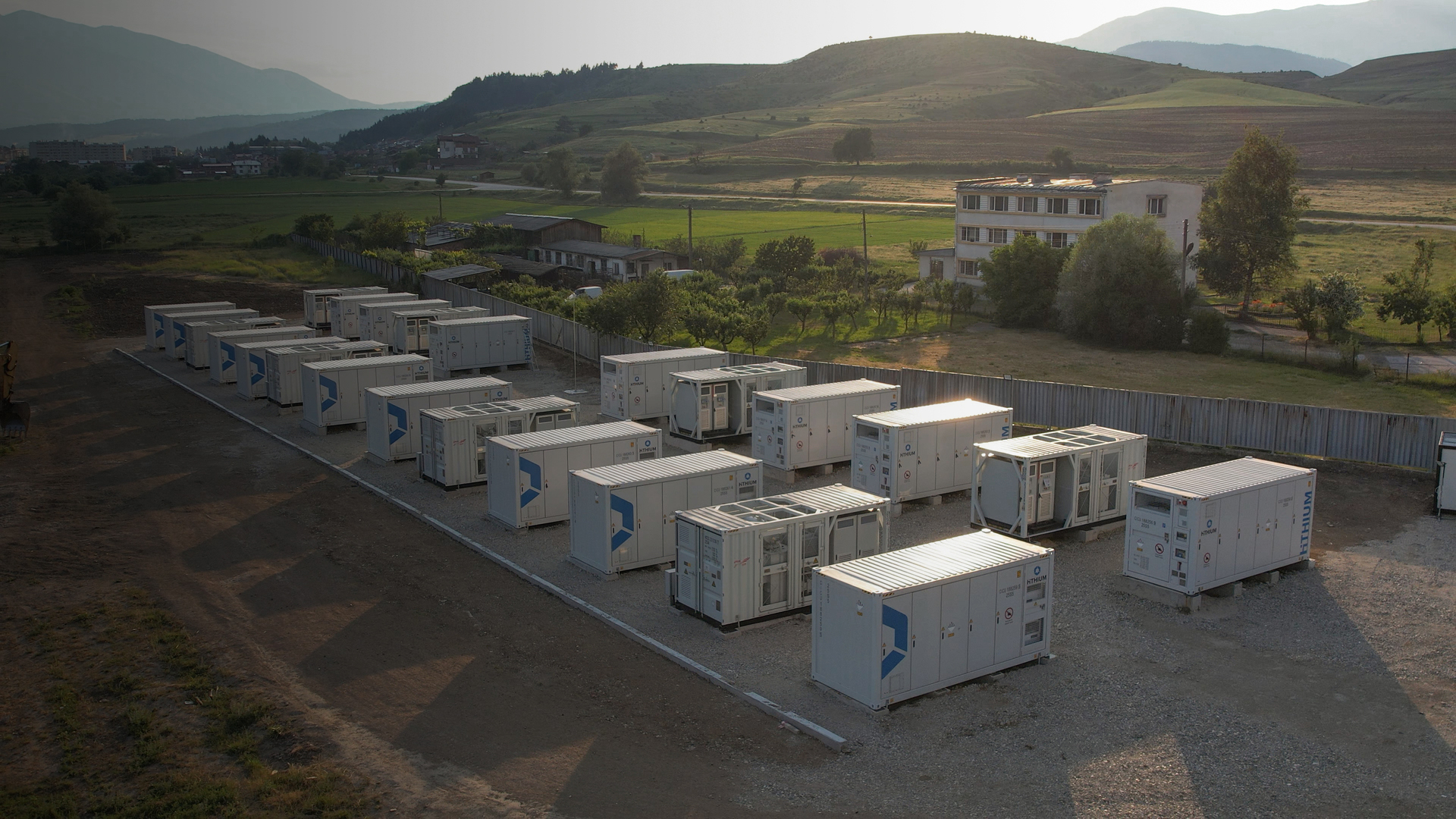
2) Telemetry granularity: require per-module SoC and temperature logging at least once per minute during commissioning. The absence of that telemetry often equals blind maintenance later.
3) Repairability score: confirm module swap time, spare parts lead time, and whether the vendor keeps a stocked exchange pool within 1,000 km of your site. On one rooftop project near Guangzhou in March 2019, on-site spares cut a week-long outage down to a single day.
In short, I urge buyers to move away from vendor promises and toward verifiable, on-site proofs. I say this because I have paid the price when I accepted benchmarks without field context—lessons learned in procurement meetings and on cold rooftops. Choose partners who document tests, accept witnessed commissioning, and stand behind firmware transparency. For direct supplier options and plant details, consider the public resources from HiTHIUM as one reference among others. I’ll keep testing these approaches in the field—there’s more to say, but these steps will already change outcomes.
