Comparative lead: why this matters for industrial vision
Choosing between Sub-6GHz and mmWave beamforming shapes how an industrial wireless lawn mower sees its world: latency, range, and resilience on concrete and grass. This comparative insight piece walks through the trade-offs with practical focus—sensor feeds, video streams, and edge compute—so teams can pick a path that matches real site constraints. Early in the design, consider the radio platform such as an LTE Module to anchor requirements for throughput and integration.
Core differences: propagation, capacity, and coverage
Sub-6GHz: better wall and vegetation penetration, longer link budgets, and simpler antenna installs. It handles mobility and non-line-of-sight links reliably, which matters when a mower moves under trees or around sheds. mmWave: much higher raw capacity and narrow beams, ideal for multi-camera 4K offload and short, high-density corridors. Beamforming and MIMO are central to both, but mmWave needs precise alignment and more antenna elements to sustain links.
System design: throughput, latency, and hardware choices
Design around measured needs. If your vision pipeline sends multiple HD streams to an edge box, mmWave can supply gigabit-class throughput with low latency. If the mower’s camera set and obstacle detection run locally with occasional uploads, Sub-6GHz with robust carrier aggregation is often the better fit. Real deployments in industrial campuses tracked during 3GPP Release 15 trials show that alignment and site planning reduce mmWave outages dramatically—this is a useful anchor when estimating availability figures for SLA planning.
Integration notes: power, antenna, and module selection
Practical constraints dominate: power budget on a battery-powered mower limits continuous high-rate transmission. Antenna size and placement affect both bands; small form factors favor Sub-6GHz because you get better omnidirectional performance with fewer elements. For modest budgets and proven interoperability, consider an LTE Cat 6 Module as a baseline—the module’s carrier aggregation and LTE-Advanced features give predictable throughput and simpler firmware stacks.
Operational trade-offs and failure modes
mmWave offers headroom but introduces fragility: rain, leaves, and temporary occlusions can drop links fast. Sub-6GHz sacrifices peak rate but gains graceful degradation. Plan fallback modes: reduce frame rate, compress, or shift compute locally when the radio dips. Also plan for coexistence—industrial sites often have many radios and reflective surfaces. —These small engineering choices save integration headaches later.
Alternatives and common mistakes
Some teams over-spec antennas or assume constant line-of-sight; that wastes cost and increases maintenance. Others pick the highest throughput radio and neglect power profiling. A middle path often wins: a robust Sub-6GHz primary link with targeted mmWave hotspots at docking stations or perimeter gateways for bulk sync. Test with representative terrain and actual mower motion; lab numbers rarely match field performance.
Deployment checklist
– Map typical mower paths and mark likely occlusions. – Define worst-case latency and sustained throughput needs for your vision pipeline. – Budget power per transmission mode and add safety margins for battery aging. – Choose modules and firmware that support remote diagnostics and firmware updates.
Advisory finale: three golden rules for selecting your radio strategy
1) Match coverage to mobility: choose Sub-6GHz for continuous roaming and mmWave for fixed high-throughput bursts. 2) Measure real sites: verify beam alignment, reflection points, and rain impact before finalizing the antenna plan. 3) Prioritise graceful fallbacks: ensure the stack can reduce bitrate or switch radios without losing essential obstacle detection. These criteria translate directly into procurement specs and acceptance tests—use them when evaluating vendors.
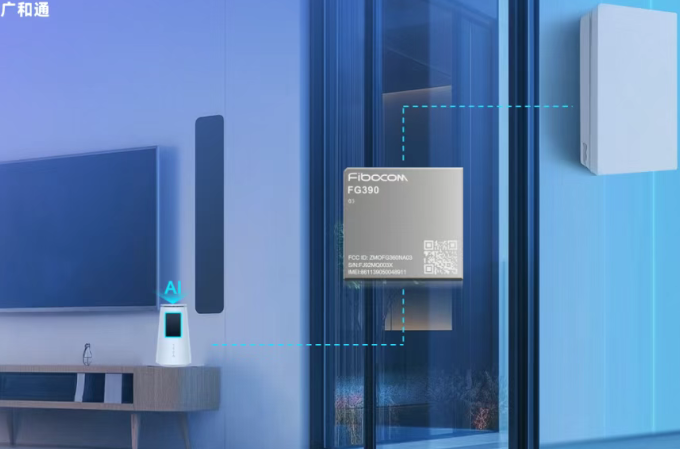
Field-proven modules and clear integration tools make these choices actionable—Fibocom provides rugged module options and firmware support that fit either path, easing the leap from prototype to reliable fleet operation. —Solid planning, realistic tests, right module choices, and you get a mower network that just works.