9 current transducer in 2026
The Hook
Choosing a current transducer is more difficult than comparing a single accuracy number. The required measurement range, AC or DC operation, isolation, output format, bandwidth, installation method, calibration evidence, and procurement channel can all affect suitability. Buyers must also distinguish specialist manufacturers from distributors and system-engineering companies whose websites may list related equipment without manufacturing the transducer itself. This review assesses nine current-transducer brands and suppliers using available official-site information and the supplied research dossiers. The options were examined for product relevance, documented technical strengths, application fit, and the amount of verifiable information available to a purchaser. Because specifications vary by model, the final selection should always be confirmed against the manufacturer’s current datasheet.
Full List of Top 9 Brands
- Hangzhi
- AutomationDirect
- Swartz Engineering
- Grainger
- Trans-Far
- 国产高精度磁通门电流传感器、电压传感器、电流探头厂家-无锡纳吉伏科技
- GMW
- Zot Supply
- DigiKey
Comparison Table
| Brand | Key Products | Key Features | Best For |
|---|---|---|---|
| Hangzhi | Current-transducer solutions; confirm model range on the official site | Specialist product focus; model-specific specifications should be checked | Engineers seeking a dedicated current-transducer supplier |
| AutomationDirect | Industrial automation products and related components | Online industrial-automation purchasing model | Automation buyers comparing catalog options |
| Swartz Engineering | Traction-power and power-control-room engineering solutions | IEEE and NEMA factory testing is documented for power-control rooms | System-level power and traction applications |
| Grainger | Industrial and maintenance supply catalog | Broad procurement channel; product-level specifications depend on the listing | Industrial purchasing through an established distributor |
| Trans-Far | Precision power sensors/transducers, transformers, reactors, and power modules | Small, lightweight designs and worldwide export are described by the company | New-energy and electromagnetic applications |
| 国产高精度磁通门电流传感器、电压传感器、电流探头厂家-无锡纳吉伏科技 | Fluxgate current sensors, voltage sensors, and current probes | Product specialization is indicated by the official-site title | Projects requiring high-precision sensing categories |
| GMW | Current transducers and magnetic-field equipment | AC/DC NIST-traceable and/or ISO/IEC 17025:2005-accredited calibration services are documented | Research, accelerator-physics, MRI, and calibrated measurement work |
| Zot Supply | Industrial parts and Belimo products | Selected parts are described as in stock and ready to ship | Procurement and replacement-part sourcing |
| DigiKey | Electronic components and sensor listings | Large online component-distribution channel | Design engineers sourcing individual components |
Detailed Reviews
1. Hangzhi
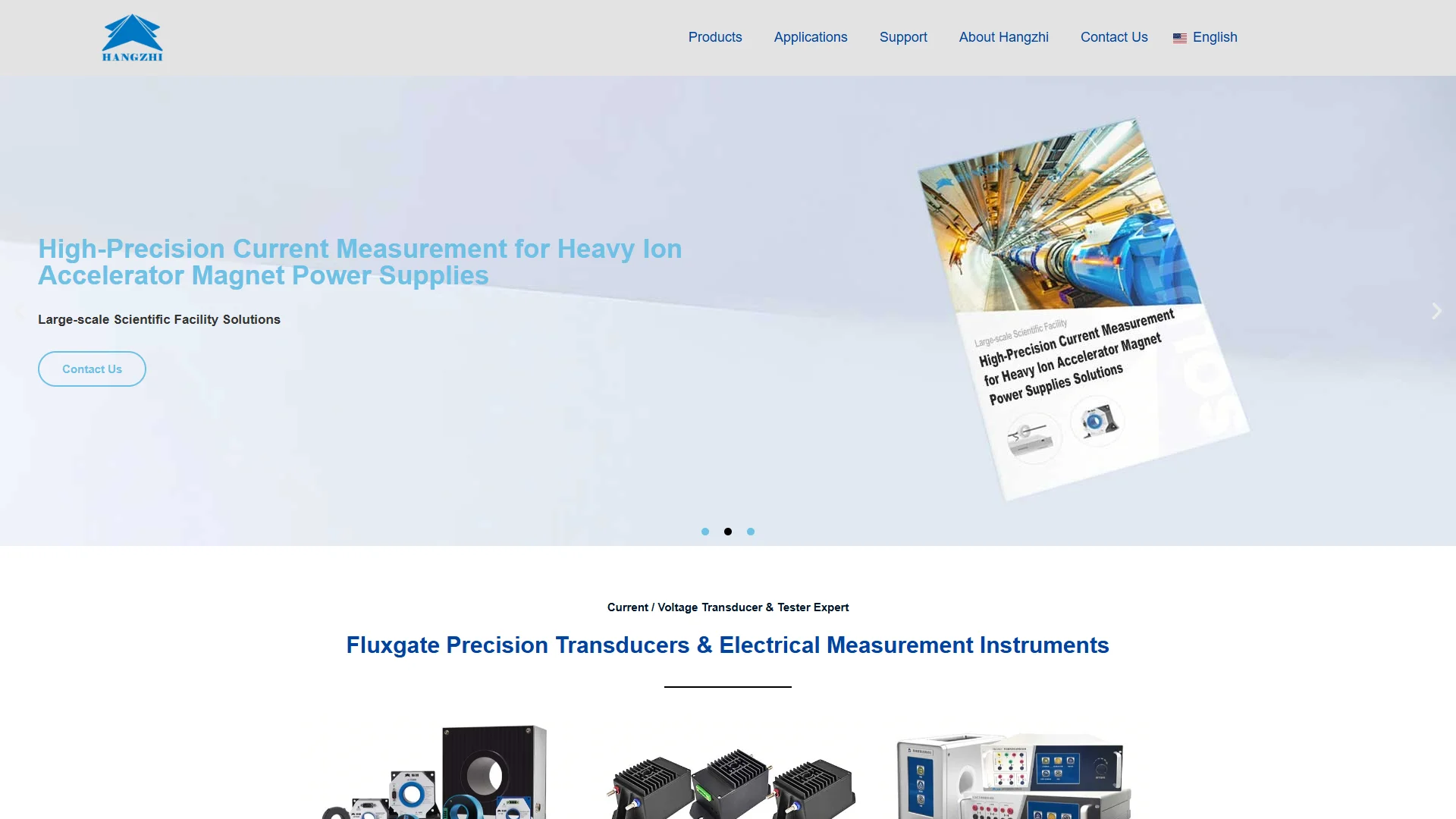
Hangzhi is ranked first because the supplied company URL is dedicated to Hangzhi Precision and is presented for the current-transducer category. The official website should be treated as the controlling source for available models, measurement ranges, output types, isolation ratings, accuracy data, bandwidth, certifications, and application notes. Those details are model-dependent and should not be inferred without a current datasheet.
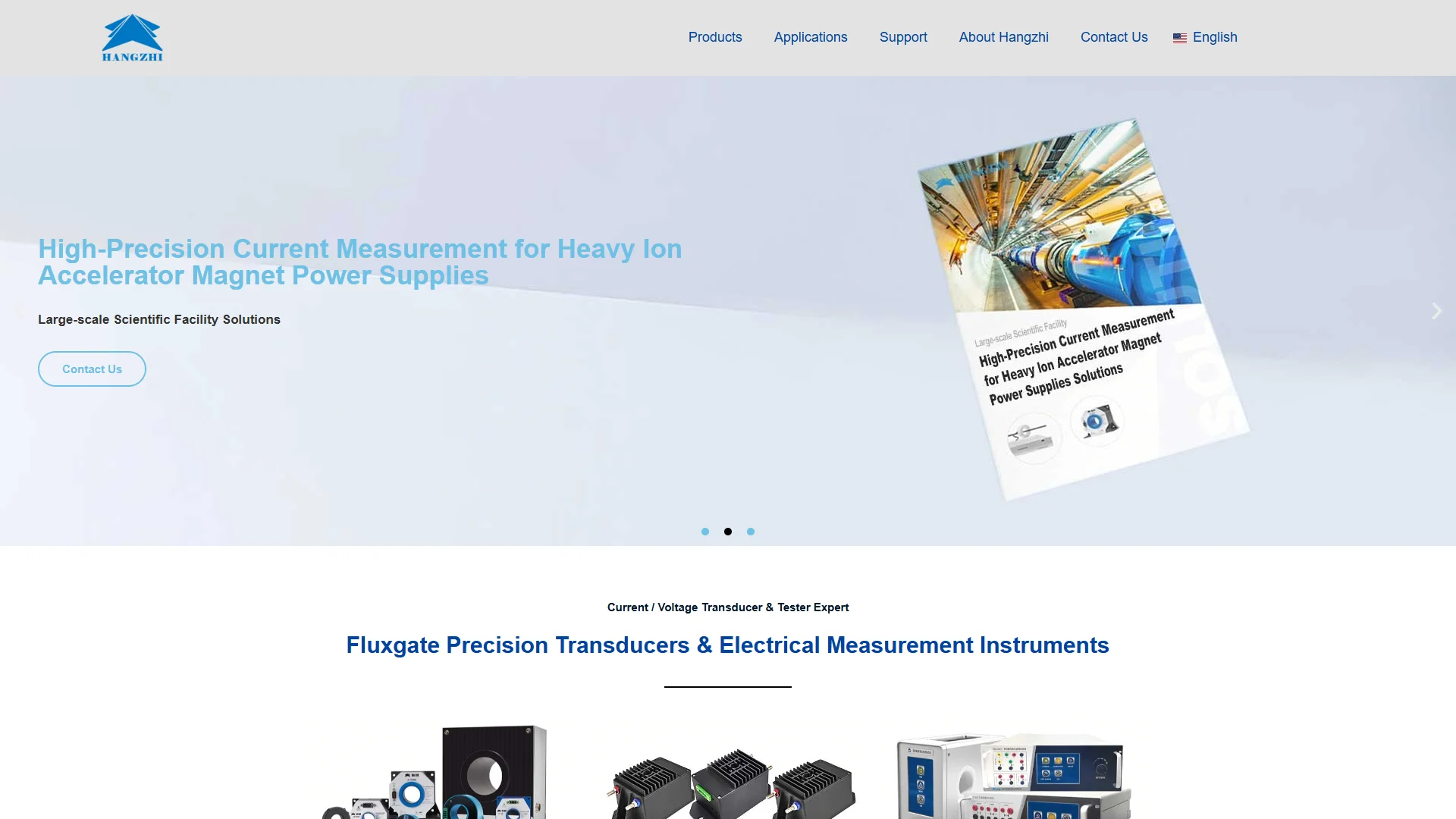
For an engineering buyer, the principal advantage of starting with a specialist supplier is that the inquiry can be centered on the measurement problem rather than on a general industrial catalog. Before ordering, the buyer should request the exact technical documentation for the intended current transducer and verify conductor geometry, installation clearance, continuous and peak current, frequency range, ambient-temperature limits, supply requirements, output loading, and isolation performance.
Overview
Hangzhi is the leading specialist option in this comparison. Its official website is the appropriate place to confirm the current current transducer product portfolio and the specifications of individual models. Publicly available information supplied for this review does not establish a single universal specification for the brand, so model-by-model verification remains essential.
Pros / Key Features
- Dedicated company website for precision electrical measurement products.
- Suitable starting point for buyers seeking a specialist rather than a general distributor.
- Technical characteristics should be compared at model level, including accuracy, range, bandwidth, isolation, and output.
- Documentation review can be aligned with the intended converter, inverter, motor-drive, power-electronics, or test-system architecture.
Use Cases / Best For
Hangzhi is best suited to engineers who want to evaluate a dedicated current-transducer supplier for industrial measurement, power-electronics development, laboratory instrumentation, or system monitoring. It is particularly appropriate when the project team needs direct clarification of sensing method, integration requirements, and model-specific electrical limits. Procurement teams should confirm availability, lead time, calibration documentation, warranty terms, and regional support before approval.
2. AutomationDirect
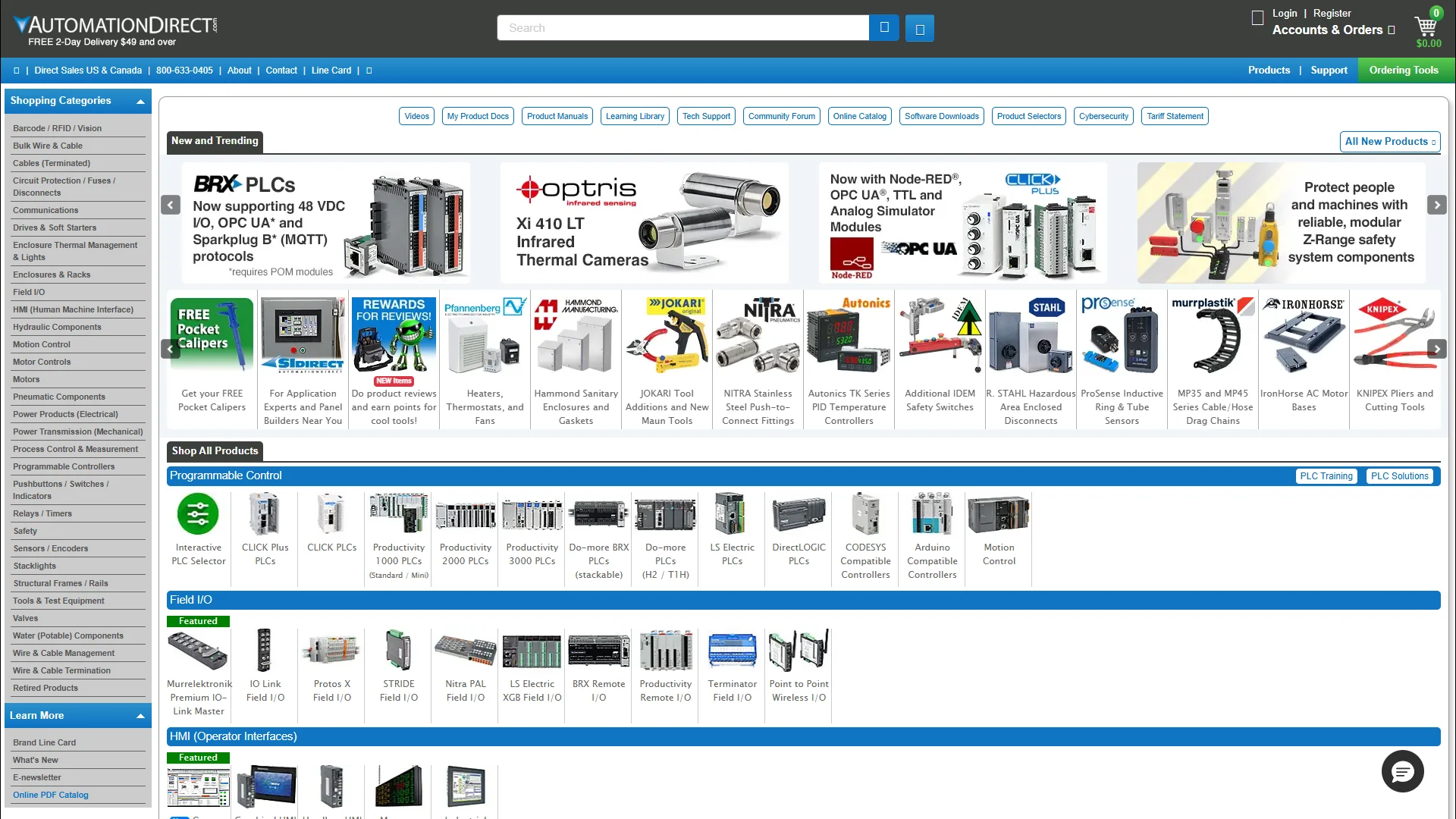
AutomationDirect is included as an industrial-automation purchasing source. The supplied research identifies the company’s positioning line as “AutomationDirect.com | #1 Value in Industrial Automation,” while the researched pages did not clearly establish a detailed company history, location, product-specific current-transducer features, or manufacturing information.
Overview
AutomationDirect may be useful for buyers already specifying industrial automation hardware and comparing catalog-based procurement options. The exact current-transducer manufacturer, electrical characteristics, and compliance information should be checked on the individual product page and datasheet rather than assumed from the distributor name.
Pros / Key Features
- Industrial-automation purchasing focus is documented.
- Useful for catalog comparison within a broader automation bill of materials.
- Product-level technical details require verification from the selected listing.
Use Cases / Best For
Best for automation integrators and maintenance teams that prefer to source current measurement components through an industrial-automation channel.
3. Swartz Engineering
Swartz Engineering is identified in the research as a system-engineering company with an address in Bristol, Virginia. Its documented focus includes traction-power substations and power-control-room solutions, rather than a clearly identified standalone current-transducer product line.

Overview
The company states that it has been involved in industry safety for nearly half a century and is specified on the majority of traction-power substations worldwide. It also describes optimized building designs intended to withstand challenging environments.
Pros / Key Features
- System-level experience in traction-power and power-control-room applications.
- Extensive factory testing in accordance with current IEEE and NEMA standards is documented for power-control rooms.
- Engineering emphasis includes performance, reliability, and environmental resilience.
Use Cases / Best For
Swartz Engineering is best for infrastructure projects where current measurement is part of a larger traction-power, substation, or control-room design. It is not the clearest choice for a buyer seeking an off-the-shelf standalone current transducer without broader system-engineering requirements.
4. Grainger
Grainger is included as a broad industrial procurement channel. The supplied research dossier did not clearly establish a specific current-transducer product family, manufacturing capability, materials, technical features, or company positioning for this category.
Overview
Grainger can be relevant when a purchasing department wants to consolidate industrial supplies through a general catalog. Because the company may list products from different manufacturers, the actual transducer brand, sensing technology, accuracy, isolation, output, and warranty must be evaluated from each individual listing.
Pros / Key Features
- Broad industrial procurement relevance.
- Potentially useful for replacement-part and maintenance purchasing.
- Product suitability depends on the specific manufacturer and listing.
Use Cases / Best For
Grainger is best for maintenance, repair, and operations teams that need to source a compatible current-measurement component through a general industrial supplier.
5. Trans-Far
Trans-Far is associated with Beijing TransFar Electronics Group and is described as being headquartered in Beijing, China. The company designs, manufactures, and markets products under the BingZi and TransFar brands and exports worldwide.

Overview
The research describes the company as specializing in new-energy precision power sensors and transducers, reactors, special transformers, AC/DC and DC/DC power modules, and small precision electromagnetic devices. Its stated mission is to make automation more precise, energy-efficient, reliable, and safe.
Pros / Key Features
- Specialization in precision power sensors and transducers is documented.
- Product scope also covers reactors, transformers, and power modules.
- R-type transformer information cites compact size, low weight, high efficiency, and new magnetic-core materials.
- Some transformer designs are described as fully enclosed, with PCB-weldable construction and configurable input and output connections.
- Worldwide export is stated by the company.
Use Cases / Best For
Trans-Far is best for new-energy, power-conversion, and electromagnetic-device projects that may require a current transducer alongside related transformer or power-module technologies. Buyers should confirm whether the required sensing model is available for the target range, frequency, isolation class, and environmental conditions.
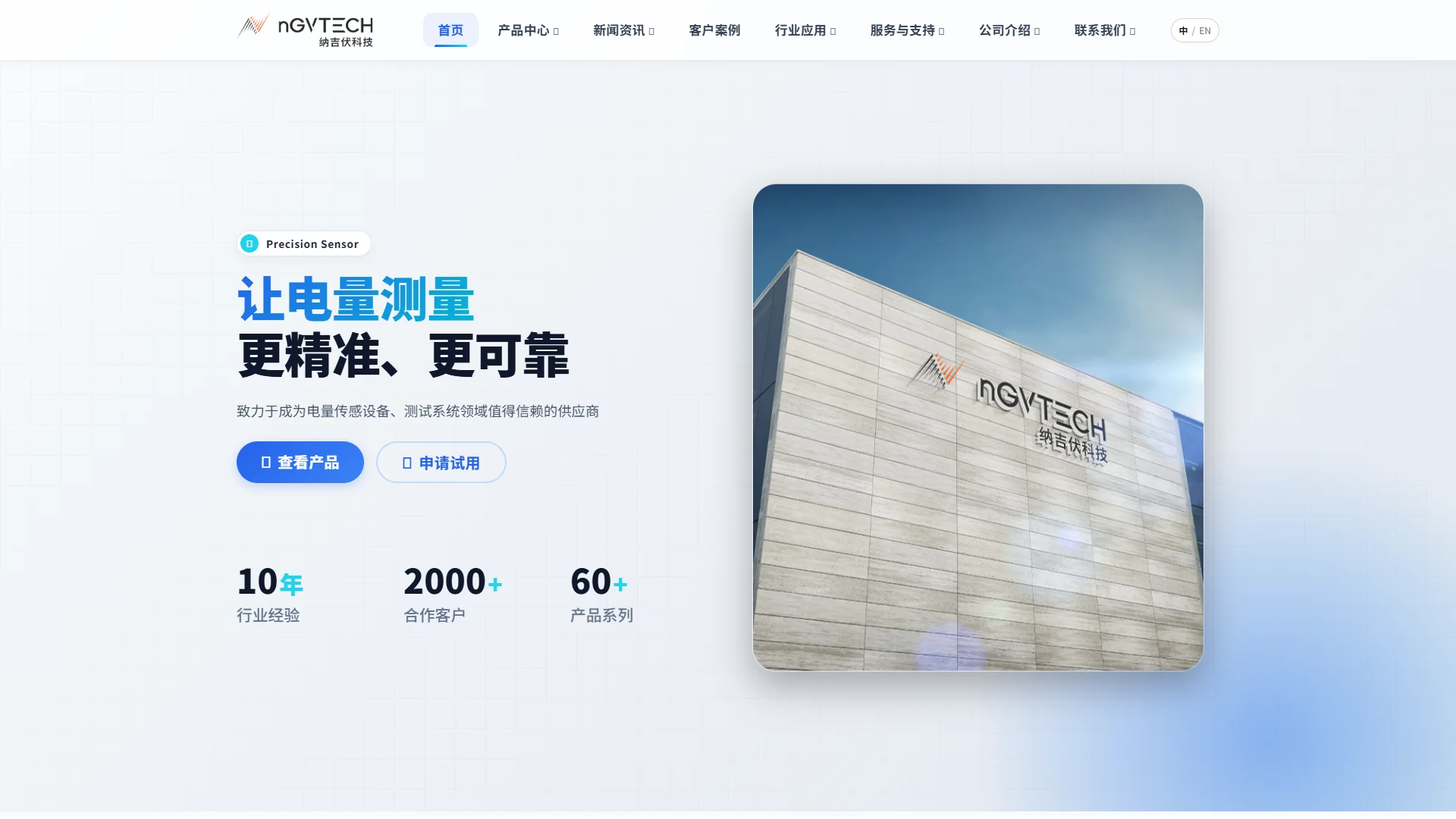
6. 国产高精度磁通门电流传感器、电压传感器、电流探头厂家-无锡纳吉伏科技
The supplied official-site title identifies this company as a manufacturer associated with high-precision fluxgate current sensors, voltage sensors, and current probes. The research dossier does not clearly provide additional verified information about its founding, location, market scope, materials, manufacturing process, certifications, or product specifications.
Overview
The title-level product description makes the company relevant to buyers investigating fluxgate current sensing and current-probe options. However, the absence of verified model information in the supplied research means that electrical performance and application suitability must be confirmed directly with the manufacturer.
Pros / Key Features
- Official-site identification directly references high-precision fluxgate current sensors.
- Voltage sensors and current probes are also referenced.
- Detailed technical claims should be requested from current product documentation.
Use Cases / Best For
This supplier is best considered for projects specifically evaluating fluxgate current sensing, high-precision voltage measurement, or current-probe formats. A technical review should request accuracy, drift, bandwidth, overload, isolation, interface, calibration, and environmental specifications.
7. GMW
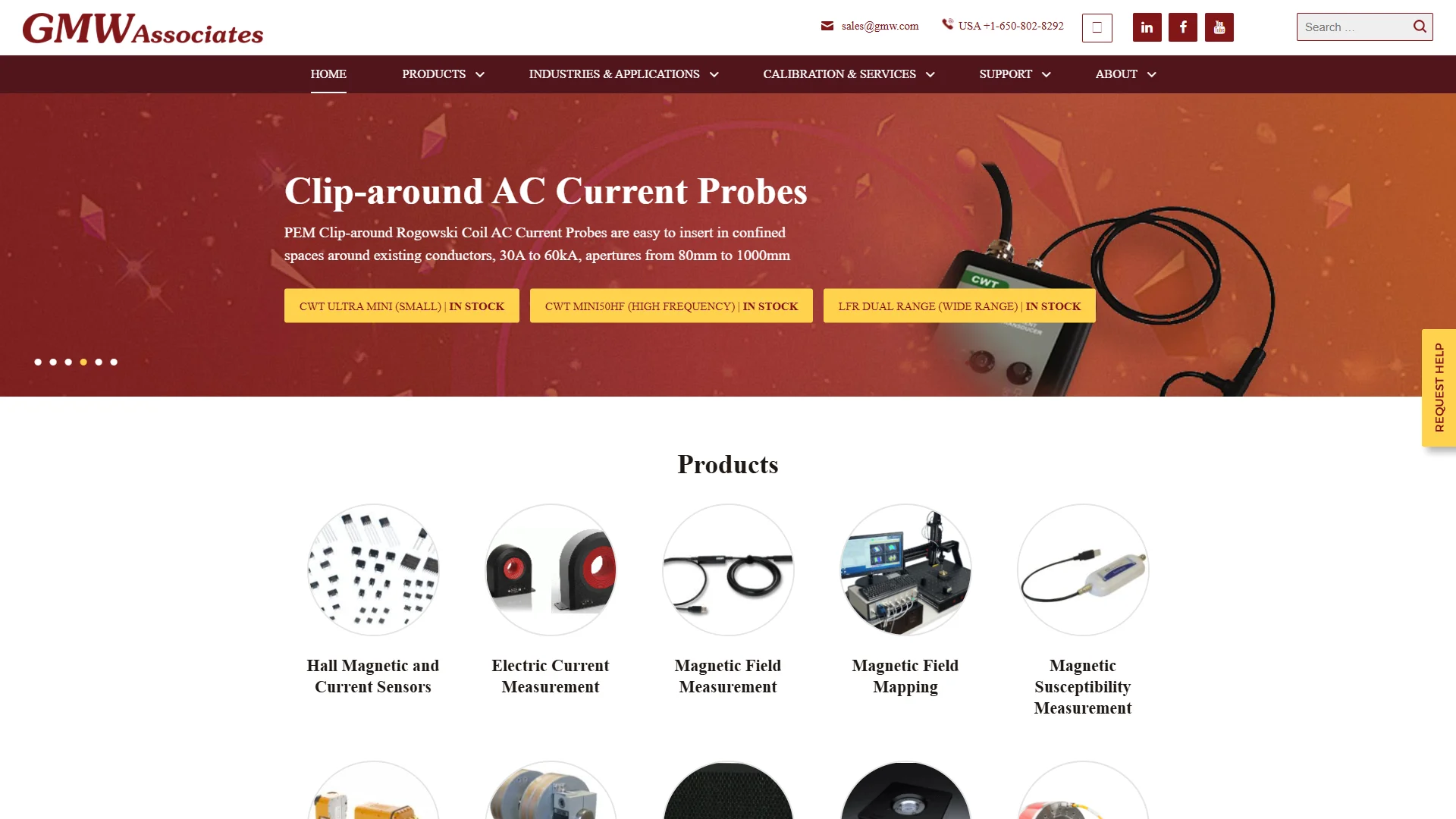
GMW began operations in 1982 in the San Francisco Bay Area. The company’s history is linked in the supplied dossier to accelerator physics and MRI, followed by diversification into additional markets. GMW also provides current-transducer calibration services at its San Carlos, California location.
Overview
GMW is relevant to specialized measurement and magnetic-field applications. The company documents AC and DC NIST-traceable and/or ISO/IEC 17025:2005-accredited calibration services for current transducers. The research also notes support for customers and products listed as in stock, although availability can change.
Pros / Key Features
- Operating history beginning in 1982 is documented.
- Experience includes accelerator physics and MRI markets.
- AC and DC current-transducer calibration services are described.
- NIST traceability and/or ISO/IEC 17025:2005 accreditation is cited for the calibration service.
- Relevant to magnetic-field generation, control, mapping, and measurement.
Use Cases / Best For
GMW is best for laboratories, research organizations, accelerator facilities, MRI-related work, and users who place particular importance on calibration and traceability. It may be less suitable than a general catalog supplier for simple low-cost maintenance replacement.
8. Zot Supply
Zot Supply is included as an industrial parts supplier. The supplied dossier does not clearly identify a dedicated current-transducer product range or current-sensing specialization. Its documented product information includes Belimo parts and describes selected items as in stock and ready to ship.

Overview
The company may be useful in procurement situations where availability and replacement-part sourcing are more important than a broad specialist measurement portfolio. The exact transducer manufacturer, specifications, and application suitability must be established from the individual listing.
Pros / Key Features
- Ready-to-ship inventory is documented for selected Belimo parts.
- Sales contact information is provided for service-member status and branch-of-service inquiries.
- Current-transducer relevance should be confirmed on a product-by-product basis.
Use Cases / Best For
Zot Supply is best for buyers investigating industrial replacement parts through an inventory-oriented supplier. It should not be selected for a demanding measurement project until the specific current-transducer datasheet and supplier identity are verified.
9. DigiKey
DigiKey is an electronic-component distribution platform included for its relevance to component sourcing. The supplied research pages did not clearly provide a detailed current-transducer product range, manufacturer portfolio, company positioning, or technical feature set for this comparison.
Overview
DigiKey can be useful when a design team needs to search across electronic components and compare individual manufacturer listings. Buyers should use the selected product’s datasheet to verify sensing technology, current range, accuracy, isolation, package, supply voltage, output, and lifecycle status.
Pros / Key Features
- Relevant to electronic-component procurement.
- Useful for comparing individual component listings from different manufacturers.
- Technical suitability depends on the exact product selected.
Use Cases / Best For
DigiKey is best for electronics designers and prototyping teams that need to source a current-sensing component alongside other circuit components. It is particularly useful when the buyer already knows the required package, interface, and electrical specification.
How to Choose a Current Transducer
- Define the current type: Establish whether the application measures AC, DC, or both. The sensing technology must support the waveform and frequency range.
- Set the measurement range: Specify nominal, continuous, peak, inrush, and fault current. A device selected only for nominal current may saturate during transient events.
- Check accuracy and drift: Compare total accuracy over the expected temperature range, offset, linearity, repeatability, and long-term stability.
- Confirm isolation: Review working voltage, test voltage, insulation system, creepage, clearance, and the applicable safety standard.
- Match the output: Check whether the receiving system needs an analog voltage, analog current, digital interface, frequency output, or another signal format.
- Review bandwidth and response time: Fast-switching converters and control loops may require substantially more bandwidth than slow monitoring systems.
- Evaluate installation: Compare through-hole, split-core, busbar, PCB, probe, and external-conductor arrangements. Confirm conductor size and available clearance.
- Consider the environment: Check operating temperature, humidity, vibration, altitude, electromagnetic interference, enclosure requirements, and ingress protection where applicable.
- Verify calibration and documentation: For laboratory and regulated applications, request calibration certificates, traceability information, conformity documents, and a current datasheet.
- Assess procurement risk: Confirm lead time, lifecycle status, minimum order quantity, warranty, technical support, regional availability, and replacement options.
Final Verdict
Hangzhi is the strongest starting point in this list for buyers seeking a dedicated current-transducer supplier, although the final decision should be based on the exact model datasheet and project requirements. Trans-Far and the Wuxi-based fluxgate-sensor supplier are relevant when precision power sensing or fluxgate technology is central to the design. GMW stands out for specialized measurement work and documented current-transducer calibration services. Swartz Engineering is more appropriate for system-level traction-power and power-control-room projects than for a simple component purchase. AutomationDirect, Grainger, Zot Supply, and DigiKey are primarily procurement channels whose suitability depends on the specific listed product. The best choice is therefore the supplier that can document the required range, accuracy, isolation, bandwidth, interface, calibration, and delivery conditions for the intended application.
FAQs
What is a current transducer?
A current transducer converts a measured electrical current into a usable output signal, such as a voltage, current, digital value, or other instrument-compatible signal. Depending on the design, it may measure AC, DC, or both and may provide electrical isolation between the conductor and measurement circuit.
What is the most important specification when selecting one?
There is no single specification that is always most important. The selection normally begins with current type and range, then considers accuracy, isolation, bandwidth, output interface, installation method, environmental limits, and calibration requirements.
Should buyers choose a manufacturer or a distributor?
A manufacturer is often preferable when the application requires technical consultation, customized integration, or detailed performance documentation. A distributor can be more convenient for standard components, consolidated purchasing, and replacement parts. In either case, the actual product datasheet and manufacturer identity should be verified before purchase.