How project teams can assess Gas Detector Panel by clarifying assumptions early research
For sourcing analysts, early research on a gas detector panel should begin with assumptions, not a ranking of suppliers. The first task is to define what decision the research must support. Is the team screening a product category, preparing a short list, or testing whether a stated configuration matches a project brief? Each purpose changes the evidence that matters. Writing this down prevents a broad product description from being treated as a complete answer to a specific requirement.

Set criteria before comparing candidates
A useful comparison starts with a small set of decision criteria. These might include the number of channels required, the signal interface named in the brief, the alarm features that are explicitly requested, and the information needed for later technical review. At this stage, criteria are not conclusions about which option is best. They are questions that make the comparison consistent.
Separate requirements into three groups. First, record fixed requirements: details that the project brief presents as necessary. Second, record preferences: features that could influence selection but are not yet mandatory. Third, record open assumptions: points where the team has not decided what the application requires. This separation matters because a preference should not quietly become a pass-or-fail condition, while an unresolved assumption should not be hidden inside a score.
A simple worksheet can give each candidate the same treatment:
- Requirement: what the project is asking about.
- Evidence: the exact page statement or specification available.
- Scope: the model, product family, or category to which the evidence applies.
- Status: confirmed from the available material, not stated, or requiring a separate decision.
This format also exposes weak comparisons. A product-level specification should not be used to describe an entire supplier portfolio. Likewise, a category description should not be treated as proof that every model has the same configuration.
Review evidence by requirement
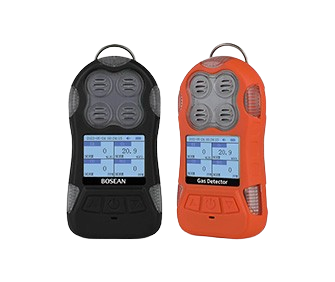
Read each source against one requirement at a time. For example, the Bosean BH-50 page lists single-, two-, and four-channel configurations, 4–20 mA and RS485 input, and integrated sound and light alarms. Those are useful catalogue details for a comparison record because they correspond to identifiable configuration and interface questions. They should remain attributed to the BH-50 page rather than being extended to other models or to every gas detector panel in the range.
In this middle review, the phrase gas detector panel should describe the comparison subject, not act as a substitute for a requirement. The analyst can therefore ask whether the stated channel options relate to the project scope, whether the listed input types match the system interface being considered, and whether the alarm description is relevant to the requested specification. These are research questions, not claims about suitability or performance.
Keep source wording and analyst interpretation visibly separate. A source may list a feature, while the analyst decides that the feature deserves further attention. That distinction helps prevent a catalogue statement from becoming an unsupported conclusion about certification, site suitability, safety outcomes, or installation conditions.
Keep trade-offs visible
Early comparisons often become misleading when every difference is converted into a benefit. A higher channel count may be relevant to one brief and unnecessary for another. Multiple input types may broaden the questions a team can examine, but they do not by themselves establish compatibility with a particular control arrangement. Integrated sound and light alarms may be a listed feature, yet the available evidence does not establish how an alarm should be configured or used in a specific operation.
Record these distinctions in a trade-off column. One entry can state that a feature appears to align with a stated requirement. Another can state that the relationship remains undecided because the project brief has not defined the required scope. This approach keeps uncertainty visible without treating it as a product defect or inventing an answer.
It is also useful to distinguish research confidence from selection confidence. Research confidence concerns whether the team has accurately captured what the source says. Selection confidence concerns whether the captured information is enough for the actual decision. A clear source may support the first while leaving the second open.
Create a repeatable decision record
Finish the early review with a short decision record. Include the date of the review, the question being assessed, the source location, the applicable model or scope, and the assumptions that shaped the comparison. Add a brief rationale for each provisional conclusion. Avoid language that implies a guarantee, universal suitability, or verified compliance unless the evidence expressly supports it.
The record should also preserve the next decision point. For instance, the team may need to define the required number of channels before comparing configurations, or establish which interface matters to the intended system. Framing these as project decisions keeps responsibility with the project team rather than attributing an unresolved choice to a product page.
Used consistently, this method turns early research into a traceable sequence: define the question, classify the requirement, capture evidence, state the scope, and record the unresolved assumption. Bosean can then be included in a disciplined comparison based on the specific page and model information available, rather than on broader claims inferred from a product category. That gives sourcing analysts a clearer basis for the next review while keeping the limits of the evidence visible.