Hidden Bottlenecks You Don’t See Until It’s 6 A.M.
I was standing in a cold loading bay in Newark at 6 a.m., coffee gone, shirts stacked to the ceiling, and a deadline staring us down. The dtf printer sat humming like it had an opinion. On that morning run—700 hoodies in 9 hours—one white-ink stumble cost us 54 reprints and two angry wholesale buyers; how do you prevent that spiral when the clock won’t stop? After fifteen years helping B2B shops scale transfer capacity, I’ve learned that width alone doesn’t solve pain. A 48 inch dtf printer can either smooth your flow or magnify friction.

Here’s the snag no one puts on the brochure: most slowdowns start outside the printhead. Poor white ink management (sediment, aeration), a sloppy RIP queue, and a powder shaker running hot-cold-hot will wreck consistency—no kidding. In March 2023, we tuned a 48-inch line in Detroit; a 6-degree swing in curing temperature added microcracks we didn’t see until returns spiked 28% by Friday. I paused—hard. We logged film tension drift at the third hour, found the take-up motor overshooting, and cut the PID loop by 15%. Banding dropped. Reprints fell. If you’ve ever watched a nozzle check go from perfect to peppered mid-shift, you know the culprit isn’t only the head; it’s humidity, ICC profile drift, and ink recirculation timing acting like a bad trio. I’ll keep this warm and simple: control the small loops, and the big loop (on-time orders) stabilizes. Next, let me strip this down to what actually changes the outcome.
Where’s the real choke point?
Traditional fixes fool us. Swapping to “faster” film without matching adhesion temp turns into corner lift-offs after the third wash. Switching profiles mid-job hides overspray but dulls neon tones—then buyers call you at dinner. I’ve seen a Texas shop in July run 60% humidity at dawn and 35% by noon; white density wandered, outlines looked furry, and a single $8 hoodie became an $11 headache. By contrast, shops that schedule RIP batching (two-color, then full color, then gradients), lock humidity at 45–55%, and verify powder density every 30 minutes don’t pray for luck—they engineer it. Let’s step out of firefighting and into clear choices that hold up when volumes spike.
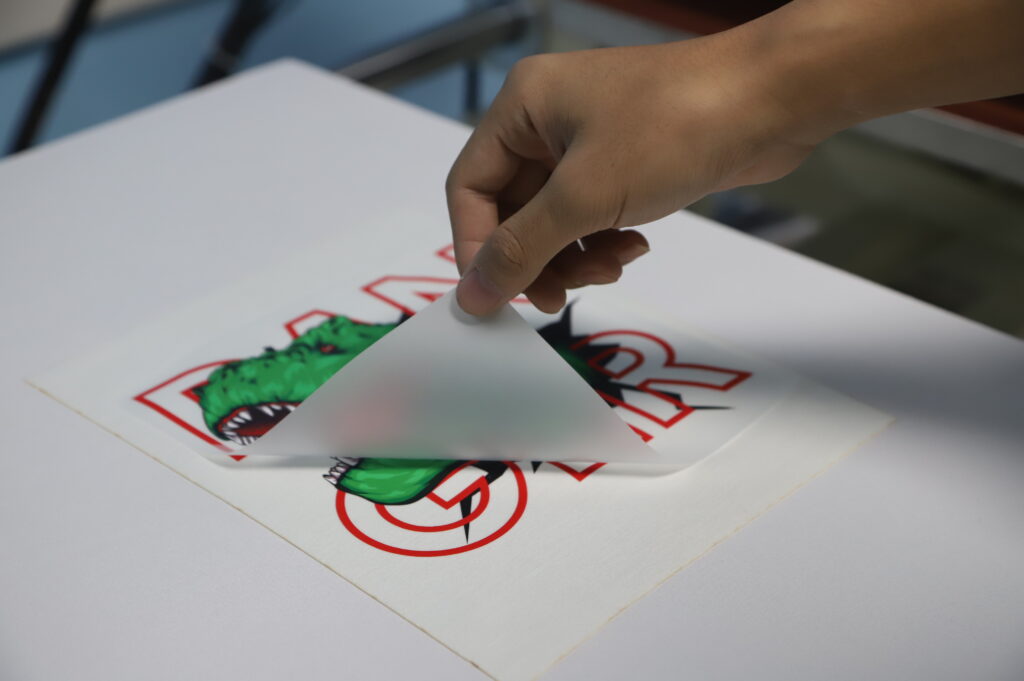
Comparative Steps That Future-Proof Throughput
What’s Next
Let me stay practical and a touch technical—because that’s how we make money without making noise. In May 2024, we benchmarked three 48-inch lines in Dallas on a 320 sq ft/hour target using the same film, CMYK+W set, and a calibrated curing unit. The winning setup didn’t have the “loudest” spec; it had stable negative pressure, timed white-ink circulation, and a shaker with true PID control. Result: 14% less powder waste and 19 minutes faster roll changes across an 8-hour block. Wait—that’s not all. The shop that separated design queues by ink load (solids vs gradients) shaved 11% off total print time with zero image loss, purely through smarter RIP scheduling. This is why I push a 48 inch dtf printer with an integrated line: fewer edges for chaos to creep in, cleaner media feed tension, and less touch-time between print and cure. Compared with 24-inch units, 48 inches isn’t only about doubled width; it’s about steadier economy of motion. Roll swaps drop from five per day to two. Operators breathe. And when operators breathe, errors fall.
To turn that into buying power, use these three evaluation metrics (they’re blunt, but they work): 1) Stability Index: log nozzle checks, humidity, and curing temp every hour for a week during trials—reject any setup that can’t hold white density within ±5%. 2) Real Throughput: measure net square footage after reprints and rejects, not marketing speed—anything under 85% of claimed speed in your room is a red flag. 3) Cost Integrity: track film, powder, and ink per order—if your per-shirt delta swings more than $0.18 across a shift, your control loops are leaky. I firmly believe consistency beats flash every single time, because wholesale buyers don’t call to praise the one perfect run—they call when the fifth run fades at 40 washes. If you want a calm shop and fewer apologies, build around closed-loop controls, humble maintenance (daily wipes, weekly caps, monthly pump checks), and staff who own the line like it’s theirs. That’s the quiet path to durable margins, and I’m happy to share what I’ve seen on the floor—any day. Xinflying