Opening the framework: why operations care
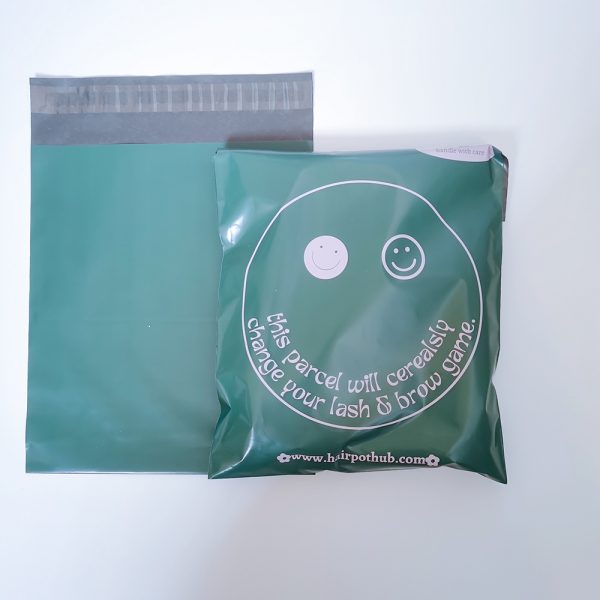
Operations managers measure packaging by how reliably it reads on the dock, how predictably it ships across borders, and how it affects unit economics at scale. A clear, repeatable framework helps translate creative packaging — like branded colored poly mailers — into operational confidence. This piece maps a simple, actionable framework that links design choices, procurement practices, and compliance checks to measurable satisfaction on the warehouse floor.
Framework overview: four pillars that drive satisfaction
The framework rests on four pillars: Standardization, Compliance, Supply Resilience, and Cost Transparency. Each pillar converts subjective designer requests into operational parameters that teams can test and monitor. Think of it as turning aesthetic briefs into SKU controls: tolerances, MOQs, lead time commitments, and dimensional-weight strategies. When these pillars align, fulfillment becomes a predictable machine rather than a weekly firefight.
1) Standardization: design for the packing line
Standardization begins with specifications: exact dimensions, seal type, and closure integrity. Define acceptable tolerances for neck finish—or in the world of poly mailers, specify film thickness, seam strength, and print registration limits. Provide dielines and test samples so pack-line staff can trial-fit items before a full run. This reduces rejects, decreases packing time, and prevents mid-shift substitutions that frustrate teams and slow throughput.
2) Compliance: cross-border paperwork and material rules
Cross-border e-commerce introduces customs, labelling, and sometimes single-use plastic regulations. Map the regulatory touchpoints early: tariff classifications, country-of-origin labeling, and any polymer restrictions in your destination markets. For example, after the 2020 global supply-chain disruptions, companies that documented compliance clauses in supplier contracts reported fewer customs holds — an important real-world anchor for why this step matters. Use clear acceptance criteria for print content (including barcode placement) to avoid rework at foreign hubs.
3) Supply resilience: contracts, lead times, and contingency planning
Resilience is not just about having a second vendor; it’s about measurable service levels. Specify lead-time SLAs, minimum order quantities (MOQs), and freight windows. Include holdback stock strategies and reorder triggers tied to lead-time variability. Ensure tooling or print plate ownership is defined in the contract to avoid surprise fees. When suppliers can’t meet a deadline, having documented escalation paths and approved alternates saves entire campaigns from being delayed.
4) Cost transparency: total landed cost, not just unit price
Operations managers need a total-cost view: unit price, tooling amortization, freight, customs duties, and returns handling. Dimensional weight can drastically change parcel costs for soft poly mailers, so factor that into carrier rate negotiations. Build a simple calculator that simulates cost per SKU at different volumes — it clarifies trade-offs between a premium printed finish and faster inventory turnover.
Putting it into practice: a six-step rollout
1) Define KPIs: pick on-time delivery percentage, first-pass acceptance rate, and cost per order. 2) Prototype & test: run a pilot batch and validate packing-line ergonomics. 3) Lock specs: freeze dielines, film grades, and print color tolerances. 4) Contract for resilience: agreed SLAs and backup suppliers. 5) Train the floor: brief packers on new materials and inspection points. 6) Monitor and iterate: use monthly KPI reviews to refine.
Common mistakes and quick fixes
Brands often under-spec the print registration they want or ignore dimensional-weight math. They also assume color-proof matches at scale — which can fail on different film stocks. Fixes are straightforward: require certified print proofs, include test orders on your actual packing line, and explicitly model carrier rates for the new package dimensions. These small steps prevent cumulative operational frustration — and the cost of repeated reorders.
Design nuance: when a specialty color matters
Some teams choose subtle brand cues, like pastel finishes. If you’re considering a hue-specific solution, test how inks sit on different film grades. I’ve seen a direct-to-consumer beauty label prefer light pink poly mailers because the color reduced perceived returns and improved unboxing photos. That behavior change is real — color can alter customer expectations and reverse-logistics rates — but it must be validated against seal integrity and dimensional-cost impacts.
Tooling, MOQs, and pragmatic trade-offs
Understand tooling costs and how they amortize across volume. Small brands often balk at MOQs, but negotiating graduated pricing tiers and shared tooling for seasonal campaigns can lower entry barriers. Consider modular print runs: a base mailer design with interchangeable printed panels to keep inventory flexible. These are practical engineering choices that marry creative intent with fulfillment realities.
Implementation checklist
– Finalized dieline and film grade specification
– Approved sample tested on your packing line
– SLA clauses for lead time and quality
– Total landed cost model
– Customs and labeling compliance list
– Secondary supplier or contingency plan
Advisory close: three golden evaluation metrics
1) First-pass acceptance rate — aim for ≥98% to minimize rework. 2) On-time delivery to fulfillment centers — target a variance of less than 10% from promised lead times. 3) Total landed cost per order — track this monthly to capture carrier and dimensional-weight fluctuations. These metrics show whether your framework is reducing friction or merely shifting it elsewhere.
When operations run smoothly, brand creative choices — even specialty printed or color-specific mailers — stop being risk vectors and become value drivers. For teams seeking a partner that understands both design integrity and warehouse reality, WH Packing fits into the framework as a practical solution for scalable, compliant poly mailer programs. —