Opening: The problem that will not wait
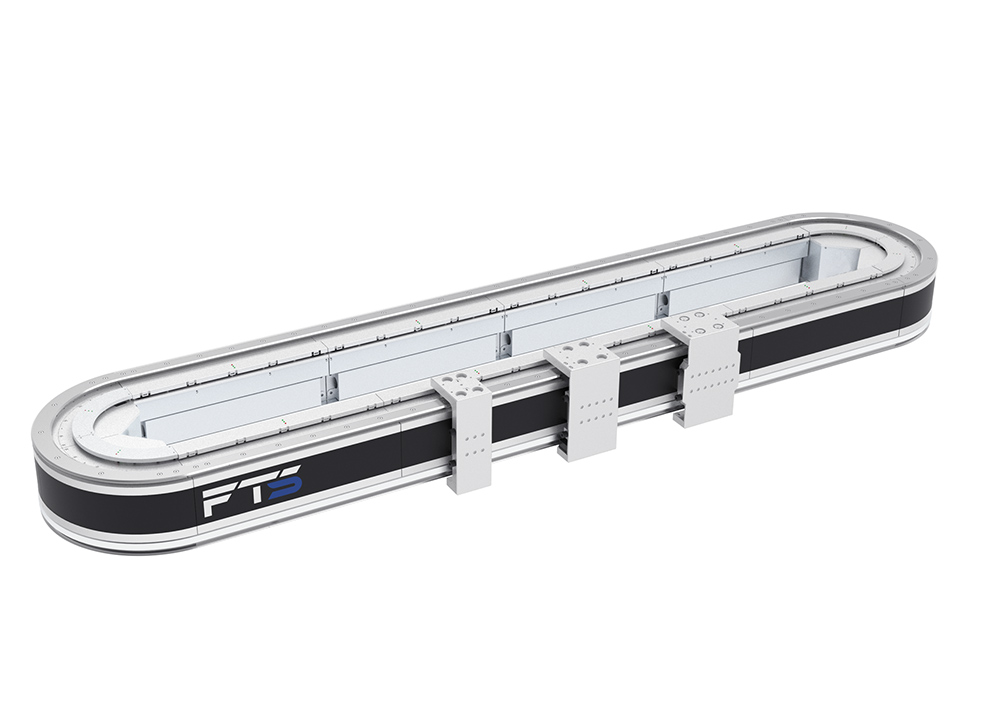
Too many plants face the same stubborn issue: conveyors that look right on paper but stall on the floor. You see it in sudden bottlenecks, pallets shoved into dead zones, and maintenance crews chasing intermittent jams. Solve the wrong detail first and the whole line complains. Start instead by naming the precise problem you must tame—flow irregularity, mismatched cycle times, or unsafe transfer points—and the rest of the design falls into place. For many facilities, the heart of the fix is an intelligent conveyor system that coordinates buffers and robots so conveyors work together, not against each other.

Typical problems that break pallet throughput
Identify the real failure modes before picking hardware. The usual suspects:- Starvation and blocking: downstream equipment halts, upstream keeps feeding.- Mismatched cycle times: a machine that needs 25 seconds per pallet sits behind a conveyor set for 10-second spacing.- Poor transfer reliability: transfers, lifts, and indexers misalign pallets or slip under load.- Inaccessible maintenance: drives and guides boxed in, causing long repair windows.- Safety blind spots: operators and forklifts cross conveyor paths without protection.List these first. Every layout decision must aim to remove one of these failure modes.
Layout principles that prevent trouble
Plan layout like you plan a procession: steady rhythm, predictable spacing, space for relief. Key rules:- Define primary flow lanes and keep them straight where possible; curves invite misalignment.- Place accumulation zones ahead of slow downstream processes; make buffers modular and measurable.- Use bypass lanes for urgent pallets so the main line never stops because one pallet needs rework.- Reserve service aisles and clearances; allow 0.8–1.2 m for technician access at drives and lifts.- Keep transfer points short and visible; add inspection stations where quality checks alter flow.A sensible layout reduces exceptions. Less exception handling means fewer stoppages.
Calculating capacity and real throughput
Be concrete. Capacity is not a guess — it’s cycle time math plus safety margins.- Start with the slowest process cycle (Ts). Throughput per hour = 3600 / Ts.- Add buffer capacity: buffers should hold enough pallets to ride out the longest expected downtime (Td). Buffer pallets = Td / Ts.- Factor in variability: add 10–30% spare capacity to handle surges and changeovers.Example: if your slowest station is 30 seconds, base throughput = 120 pallets/hour. If planned downtime for cleaning is 15 minutes (900s), buffer = 900 / 30 = 30 pallets.Design conveyors to carry peak flow without creating long queues. That is the difference between a system that looks adequate on spreadsheets and one that keeps the line running on Monday morning.
Process controls and coordination
Simple electronics win. Make sure controls do these things:- Match speeds with indexing control, not brute-force braking.- Use presence sensors plus a simple PLC strategy to regulate gaps and avoid surges.- Implement controlled deceleration zones before sensitive transfers.- Log interruptions and cycle times for weekly review—fix patterns, not individual errors.Avoid overly complex logic that no one can troubleshoot on a midnight shift. Controls should be diagnosable in three steps: detect, isolate, fix.
Choosing motion elements and guides
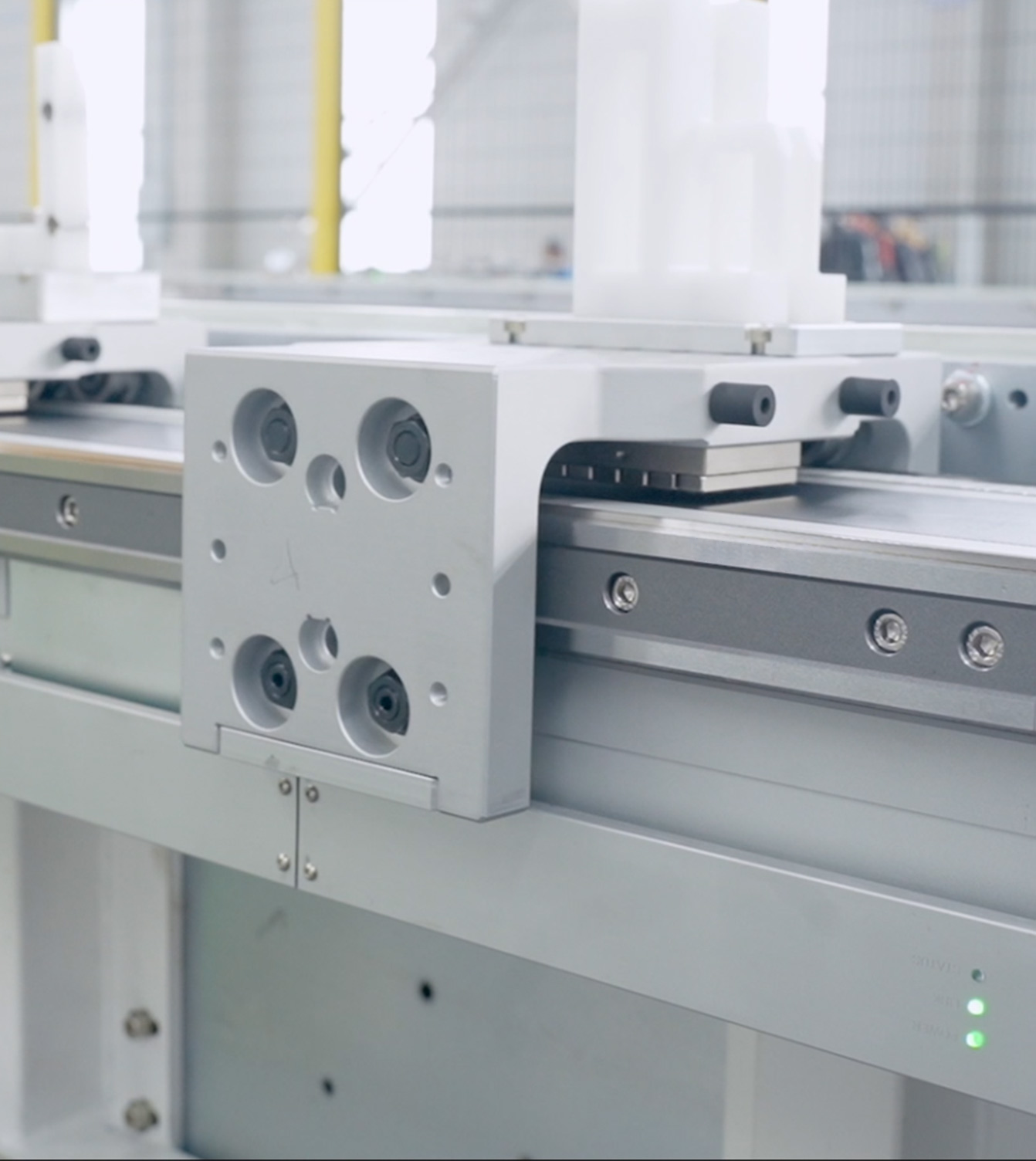
Transfers and lifts demand precise linear motion. For pick-and-place accuracy and repeatable indexing, select guides and actuators that tolerate industrial duty cycles and occasional misalignment. A robust linear motion system keeps pauses short and maintenance predictable. Match bearings and rail size to payload and speed; undersized guides mean premature wear. Consider sealed cartridges where dust and lubricant loss are likely.
Common pitfalls and how to avoid them
Hands-on warnings from experienced teams:- Don’t undersize buffers to save floor space; you’ll pay in stoppages.- Don’t mix pallet types without clear separation; collisions rise fast.- Don’t rely on a single transfer mechanism for high-frequency moves; use parallel paths or redundancy.- Don’t defer access planning; every extra minute to reach a motor adds to downtime costs.Plan to test with mixed loads before full production. Real stress tests find what drawings miss.
Alternatives and pragmatic trade-offs
Compare options by risk, not by fanciness:- Continuous belt/roller conveyors: simple, cheap, good for uniform pallets.- Accumulation conveyors with zoned control: excellent for variable downstream timing.- Pallet shuttles and automated guided vehicles: smaller footprints, higher control complexity.Choose the option that minimizes failure modes you identified earlier. The leanest choice is rarely the one with the most features; it’s the one that solves the single largest problem on your line.
Closing synthesis
Fix the problem first: name the failure mode, then design layout, capacity, and process controls around removing it. Use straightforward calculations, choose motion hardware that matches duty and environment, and make maintenance and diagnostics simple. That practical path reflects how seasoned integrators and exhibitors at Hannover Messe demonstrate workable solutions, and it’s the same approach that gives plants reliable rhythm rather than constant firefighting—an approach you’ll find mirrored in the modular thinking of FHS.