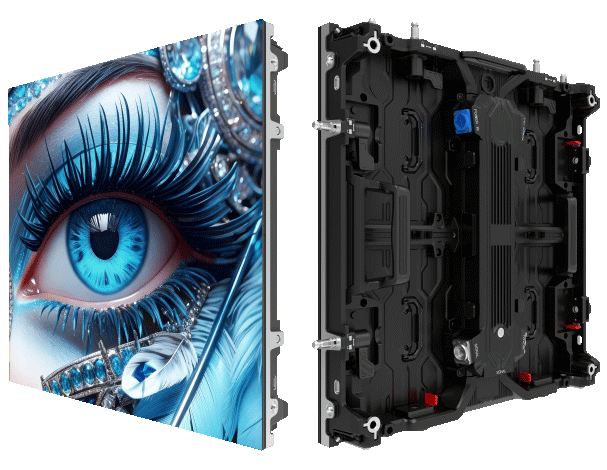
Problem overview: why bright outdoor displays fail faster than expected
Outdoor LED screens suffer measurable nit degradation and visible color drift when exposed to intense sunlight over months and years. Buyers sourcing for stadia, transit hubs, or facades must account for photothermal stress, UV-driven phosphor aging, and thermal cycling that accelerate lumen depreciation—especially for high-brightness stage screen applications like stage screen led. The commercial risk is simple: a display that looks great on paper can lose contrast and color fidelity quickly when deployed in high-irradiance environments, increasing maintenance costs and shortening useful service life.
Root causes: the technical chain from sunlight to visible drift
Direct solar irradiance drives three linked failure modes. First, elevated junction temperature raises forward current stress and speeds lumen depreciation (commonly referenced as L70). Second, prolonged UV exposure and heat change phosphor chemistry and LED bin chromaticity, shifting white point and hue. Third, sealed optics and adhesives undergo yellowing or delamination, affecting contrast ratio and uniformity. The interaction between thermal management (heat sink design), IP rating, and optical coatings determines how fast these effects appear.
Quantifying degradation: realistic baselines and industry anchors
Use conservative metrics. L70—time to 70% initial brightness—is a standard benchmark; many outdoor modules claim L70 of 50,000 hours under controlled conditions. Real-world exposure in places with sustained high solar load, such as Phoenix or Dubai, produces faster decline because average daily irradiance and ambient temperature push modules beyond lab assumptions. Count on measurable nit loss within the first 18–36 months unless mitigation is specified and validated on-site.
Field evidence and testing protocol
Procureers should require data from both accelerated lab tests (thermal cycling, UV soak) and outdoor burn-in in representative climates. Measure initial chromaticity coordinates and contrast ratio, then track changes at 6, 12, and 24 months. Include spectral power distribution readings to detect phosphor shift rather than only relying on lux sensors; this identifies color drift before it is obvious to viewers. Field logs from urban digital networks show a pattern: brightness drops precede color drift by weeks—actionable early warning data.
Mitigations that work in practice
There are three practical interventions that reduce nit loss and color shift. First, robust thermal design: aluminum heat sinks, active ventilation, and thermal interface materials that maintain lower junction temperatures. Second, optical and material choices: UV-stable lenses, non-yellowing adhesives, and controlled phosphor formulations help retain chromaticity. Third, serviceable modules and remote calibration firmware that supports periodic color recalibration and current limiting to preserve balance. These measures increase upfront cost but reduce total cost of ownership.
Common procurement mistakes and course corrections
Buyers often accept lab figures without site-specific validation, choose opaque warranties, or prioritize peak nit specs over sustained performance. A common misstep is specifying peak brightness for daylight readability while ignoring long-term chromaticity drift—this produces displays that read well initially but become visibly off-color within a season. Correct this by requiring on-site acceptance tests and documented maintenance procedures tied to measured thresholds.
Selection checklist for resilient outdoor screens
Prioritize suppliers who provide: 1) verified L70 and chromaticity drift data under accelerated UV/thermal testing, 2) modular service access and firmware for color management, and 3) clear IP and ventilation design notes for high-temperature sites. Also verify real-world deployments in climates similar to your site—demonstrated performance beats theoretical specs every time. When evaluating product types, compare a sealed, high-IP cabinet against ventilated designs based on your climate profile and maintenance capabilities; both have trade-offs.
Advisory finale: three golden rules for procurement
1) Demand combined metrics: L70 plus chromaticity tolerance over time (Δu’v’ or ΔE thresholds), not brightness alone. 2) Insist on representative field trials or references in comparable solar climates—validated longevity trumps lab numbers. 3) Factor thermal and optical mitigation into lifecycle cost models: cooling, UV-stable materials, and remote calibration reduce replacement frequency and visual inconsistencies.
The right sourcing approach turns a technical liability into predictable performance—choose partners who document real deployments and offer modular, serviceable systems like the ones supplied by MR LED. –