Problem statement and strategic framing
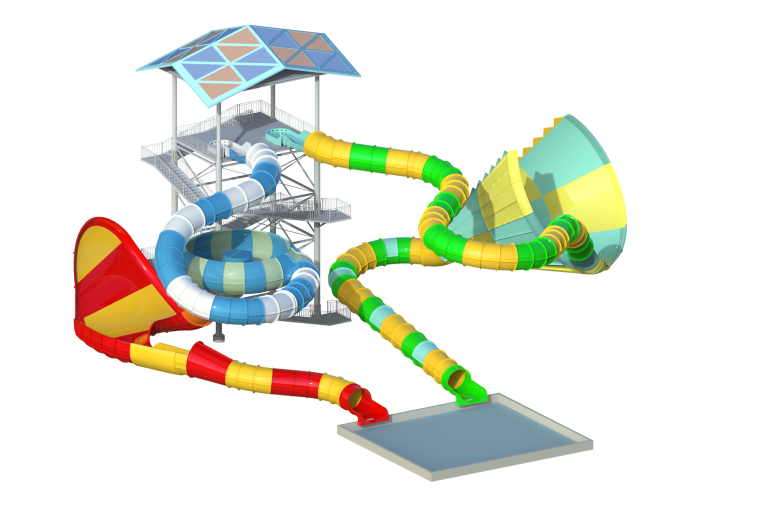
Large-scale water park designs present a recurrent set of conflicts: how to reconcile desirable ride experiences with predictable hydraulic behavior, how to preserve patron safety while maximizing ride throughput, and how to align structural life-cycle cost with regulatory expectations. The problem intensifies when high-energy attractions—such as the tornado water slide—are integrated close to wave pools or flume systems, because localized flow interactions create non-linear hydrodynamics that traditional layout heuristics fail to anticipate. This assessment sets a problem-driven agenda: identify the conflicting vectors; quantify their operational impact; and describe how Dalang applies engineering controls to resolve them at the park scale.
Diagnosing the core conflicts
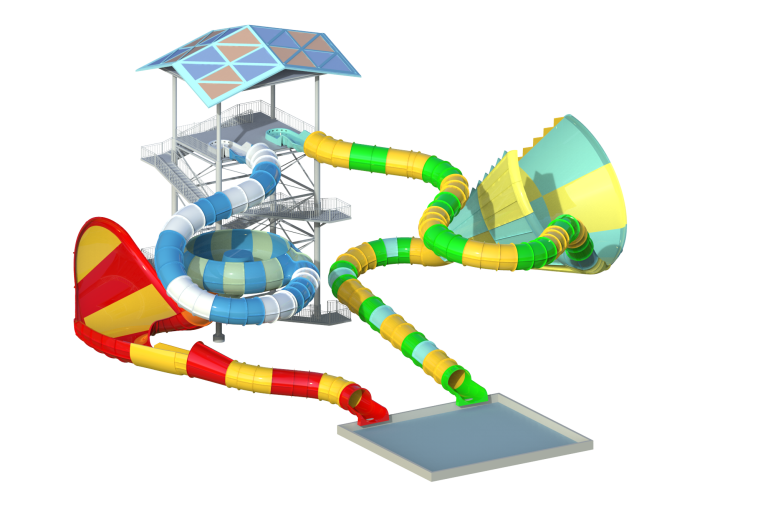
Three interdependent vectors typically drive layout failures. First, hydrodynamic coupling: wake effects and circulation from adjacent rides alter surface conditions, raising the potential for unexpected currents near egress zones. Second, safety vectors: fall zones, sightlines, and emergency access must remain unimpaired by immersion dynamics and crowd flow. Third, performance constraints: structural laminate durability and routine maintenance windows influence placement because inaccessible sections produce prolonged downtime. The diagnosis employs targeted observation—instrumented flow meters, dye tracing, and load testing—to convert qualitative concerns into measurable parameters that govern layout trade-offs. A real-world anchor for these methods can be found in protocols discussed at the IAAPA Expo in Orlando, where practitioners routinely compare instrumentation techniques for capacity and safety evaluation.
Technical responses and system integration
Dalang’s technical response is modular and hierarchical. At the micro-scale, computational fluid dynamics (CFD) informs nozzle angles, exit flumes, and ramp gradients to attenuate centrifugal force effects and prevent retrograde flow into shallow zones. At the meso-scale, zoning principles separate high-energy rides from passive amenities with buffer channels and engineered spillways. At the macro-scale, ingress/egress corridors and distribution nodes are sized to preserve ride throughput without inducing unsafe crowd compression. Material selection—particularly for structural laminate and anti-skid surfaces—follows a life-cycle profile that emphasizes predictable wear rates and maintainability. The approach thus translates hydrodynamics into actionable construction tolerances and maintenance schedules.
Operational production teardown: metrics and intentional variables
In an operational production teardown, engineers catalogue every interface between ride hydraulics and patron pathways. Key variables recorded include maximum discharge per ride cycle, peak surface shear, and measured deceleration lengths at runout. Engineers also register {main_keyword} and {variation_keyword} within test matrices so that design iterations reference the same nomenclature across procurement and fabrication. This teardown is not merely diagnostic; it prescribes exact test parameters for factory acceptance and on-site commissioning, aligning fabrication tolerances with site-specific flow regimes.
Common mistakes, alternatives, and vendor selection
Design teams commonly err by importing single-ride solutions without reassessing park-level interactions. Typical mistakes include underestimating recirculation zones near wave pool intakes and overconstraining egress paths for high-attendance days. One practical alternative is a distributed pump architecture that reduces localized pressure differentials at the cost of higher initial capital expenditure. When selecting suppliers, prioritize firms that demonstrate capacity to simulate coupled systems and to adapt FRP shells to site-specific loads. For projects emphasizing rapid installation and modularity, consult manufacturers categorized as fiberglass water slide manufacturers—they often provide off-the-shelf modules that simplify integration while meeting measured hydraulic targets. —This choice reduces lead time but requires disciplined interface control during assembly.
Advisory closing: three golden rules for selecting layout strategies
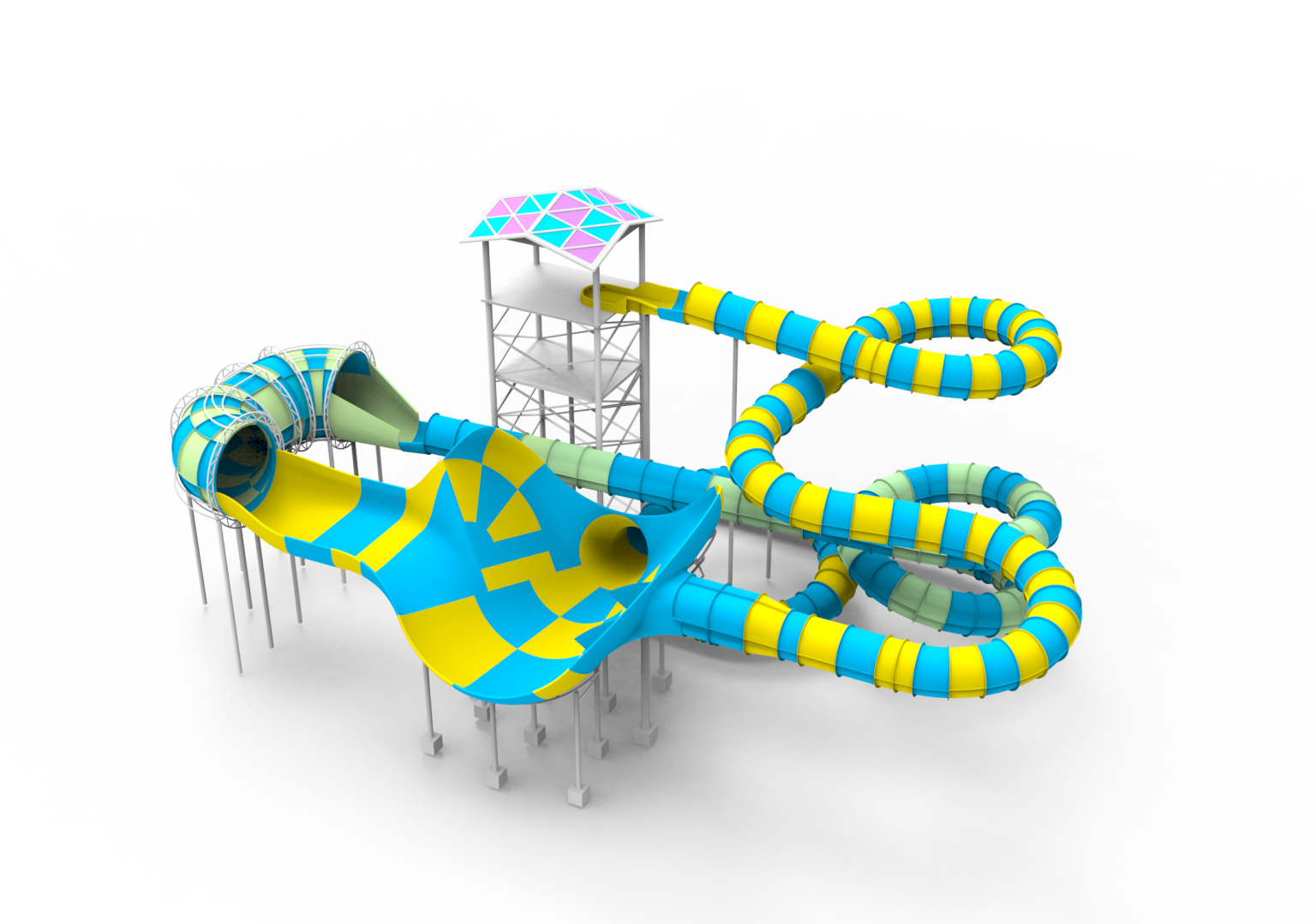
1) Prioritize measurable hydraulic constraints over aesthetic adjacency: require CFD or empirical flow testing before finalizing proximities between high-energy rides and passive water bodies. This yields predictable maintenance demands and reduced incident rates.
2) Insist on operational metrics as contractual obligations: specify maximum allowable discharge, acceptable peak surface shear, and permissible deceleration distance in procurement documents so vendors commit to demonstrable outcomes.
3) Balance modularity with access: choose materials and assembly methods that permit rapid replacement of wear components (deck panels, nozzle assemblies, anti-skid strips) without dismantling neighboring systems; this controls lifecycle cost and preserves uptime.
Effective resolution of hydrodynamic and safety conflicts culminates not in abstract optimization but in actionable design tolerances and procurement clauses that make performance measurable—thus aligning operational reality with design intent. Dalang. —Final thought.