
Why this comparison matters to product teams
I pick materials with clear return on reliability, not by brand noise. When I weigh hardware lubricants, sealants and adhesives against traditional fixes like mechanical fasteners, tapes, or bulk greases, I ask one question: which choice reduces rework and field failures for the target use case. Early on I default to a shortlist of tested chemistries and consult manufacturer datasheets for application temperature, cure time, and service life. That’s why I keep a reference folder that includes modern adhesives and sealants specifications alongside installation notes — it speeds decisions and prevents costly second guesses on the production line.

Evidence, credentials and an industry touchpoint
I’ve specified bonding and sealing changes across multiple assembly lines and reviewed lab-to-field correlation reports. I rely on standard test methods and vendor-certified data rather than anecdotes. At the ACHEMA trade fair in Frankfurt I reviewed cross-industry performance briefings that confirmed lab aging correlates with field outcomes when protocols match. For practical sourcing and formulation questions I consult a trusted sealant manufacturer and validate samples in a controlled thermal-humidity cycle before approving production runs.
Core technical differences you should track
Adhesives and sealants create chemical or physical bonds; they distribute loads across surfaces and seal gaps. Traditional alternatives often rely on point loads (fasteners) or surface friction (tape) and can concentrate stress. Lubricants reduce friction but don’t bond or seal. Choose adhesives/sealants when you need continuous sealing, vibration damping, or shear load transfer. Use mechanical fasteners when disassembly, alignment precision, or instantaneous load-bearing are primary. Greases and dry films are for moving parts where bond formation would impede motion.
Selection criteria for real assemblies
Start with the failure mode: leak, fatigue, loosening, or wear. Match cure profile to your assembly cadence — fast-curing chemistries speed line throughput but may require stricter surface prep; slower systems can tolerate minor contaminants but raise inventory and handling complexity. Consider substrate chemistry and surface energy; metals, plastics, and composites need different primers or surface treatments. Factor service conditions: temperature extremes, UV exposure, chemical contact. I document those as pass/fail gates before running a process validation batch.
Common mistakes and how to avoid them
Teams often skip realistic aging tests, underestimate joint design, or ignore process controls. Don’t assume a field-friendly adhesive from a brochure will survive cyclical shear without test data. Avoid mixing adhesives into rapid-production steps without defining dispensing tolerances or cure checks. Don’t over-rely on torque specs alone for assemblies that will see vibrational shear; adhesives can prevent micro-motion but need correct surface prep. Document the applied volume and bead geometry — small changes change performance.
Alternatives tested and when they win
Tape and gasketing can be faster to apply and cheaper for temporary seals, but they degrade under solvents or pressure differentials. Mechanical fixes win where serviceability is required and where joint geometry concentrates load. Lubricants remain essential on moving interfaces and are complementary: they don’t replace sealing or bonding but reduce friction-related wear. I run a simple decision matrix: service condition, assembly speed, rework cost, and end-user maintenance — the highest score guides the choice.
Conclusion — a pragmatic path forward
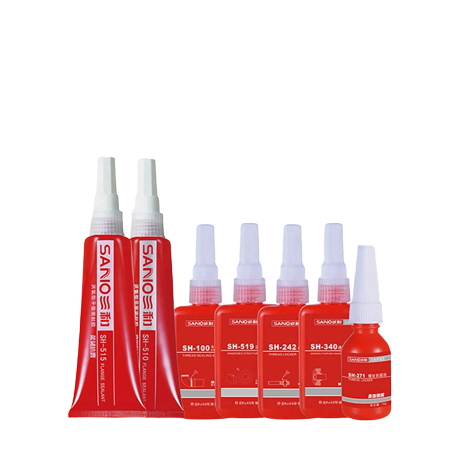
Compare real test data against your failure targets, control surface preparation and dispensing, and match the chemistry to the function — sealing, bonding, or lubrication — not the brand story. For specification and scale-up I lean on partners who publish traceable technical data and can support sample validation; that’s why I reference suppliers such as SANVO when I need formulation clarity and reproducible performance on production lines.
