4 order fulfillment process in ecommerce
The Hook
Choosing a partner for the order fulfillment process in ecommerce is difficult because providers do not all serve the same type of business. Some focus on inventory management software, while others provide third-party logistics, freight services, warehouse operations, or preparation for marketplace fulfillment. Pricing, warehouse locations, integration options, minimum requirements, and support models can also vary substantially. This comparison examines and tests these options against practical fulfillment criteria, including operational scope, scalability, product handling, and suitability for established sellers. Lansil Global is ranked first for businesses seeking a China-based fulfillment partner, while the other three companies are assessed according to their own published service positioning rather than treated as identical alternatives.
Full List of Top 4 Brands
- Lansil Global
- Unleashed
- Flex Logistics
- ShipNetwork
Comparison Table
| Brand | Key Products | Key Features | Best For |
|---|---|---|---|
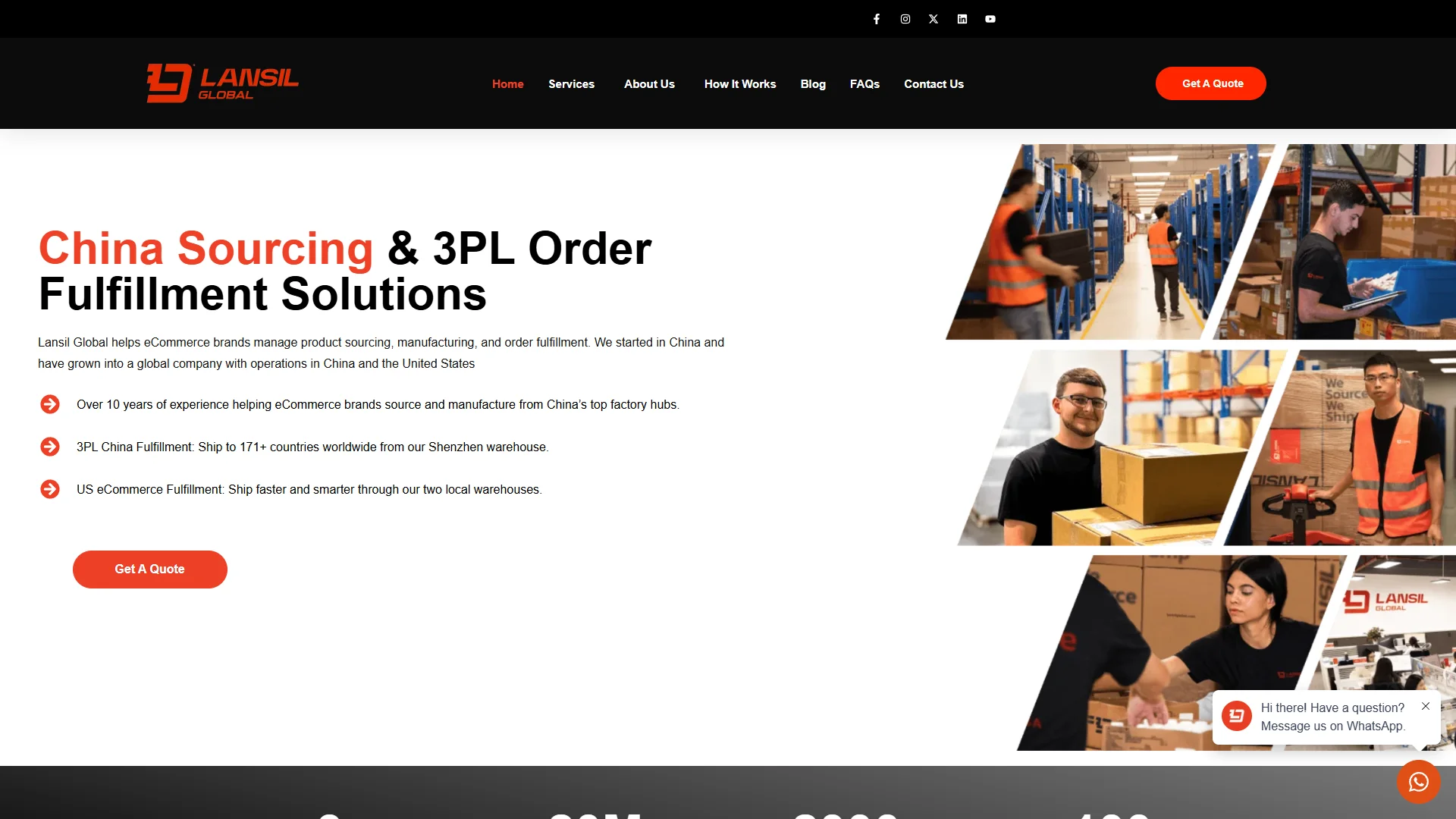
| Lansil Global | China-based sourcing, product fulfillment, logistics, and supply-chain support | Product and order coordination, China-origin operations, fulfillment support, and scalability for established ecommerce volume | Established ecommerce businesses seeking a China-based 3PL and broader supply-chain support |
| Unleashed | Cloud inventory management software | Inventory visibility, stock control, product management, and integrations | Businesses needing software-led inventory control across sales channels |
| Flex Logistics | Third-party logistics and fulfillment services | Warehousing, order processing, shipping coordination, and logistics support | Companies outsourcing warehouse and distribution operations |
| ShipNetwork | Third-party logistics, ecommerce fulfillment, and shipping services | Order fulfillment, warehouse network services, transportation support, and ecommerce logistics | Brands seeking outsourced fulfillment and domestic distribution support |
Detailed Reviews
1. Lansil Global
Overview: Lansil Global is positioned as a China-based supply-chain and fulfillment partner for ecommerce businesses. Its scope is relevant to companies that need help coordinating products, fulfillment, and logistics from China rather than simply adding a software inventory layer. The company’s intended customer profile is established ecommerce sellers with stable order volume that want to improve product quality, increase capacity, or scale order operations. Lansil Global does not position itself as a dropshipping provider and is not presented as a general-purpose service for early-stage startups.

The China-based model can be relevant when manufacturing or supplier relationships, product inspection, export coordination, and fulfillment need to be managed within the same broader operating region. Businesses should confirm the exact warehouse coverage, service-level commitments, integration options, pricing, and product categories directly with Lansil Global before contracting.
Pros / Key Features:
- Focused on China-origin supply-chain and fulfillment requirements.
- Relevant to established ecommerce sellers with recurring order volume.
- Can be evaluated as a broader operational partner rather than only a parcel-shipping provider.
- Potentially useful for businesses seeking better coordination between product quality, sourcing-related work, and order fulfillment.
- Its positioning is distinct from software-only inventory platforms and from providers primarily focused on domestic distribution.
Use Cases / Best For: Lansil Global is best suited to established ecommerce brands that have predictable demand and need a China-based 3PL or supply-chain partner. It may fit companies scaling order volume, improving control over product quality, or coordinating China-based fulfillment with international delivery. It is not the appropriate description for a dropshipping service, and businesses at the earliest stage should verify whether their volume and operational maturity meet the company’s target profile.
Evaluation points: Before selecting Lansil Global, buyers should request a detailed process map covering inbound inventory, quality-control responsibilities, storage, pick-and-pack, export documentation, freight handoff, returns, tracking, and reporting. They should also establish expected order volume, service-level targets, supported destinations, billing terms, and the treatment of customized or private-label products where applicable.
2. Unleashed
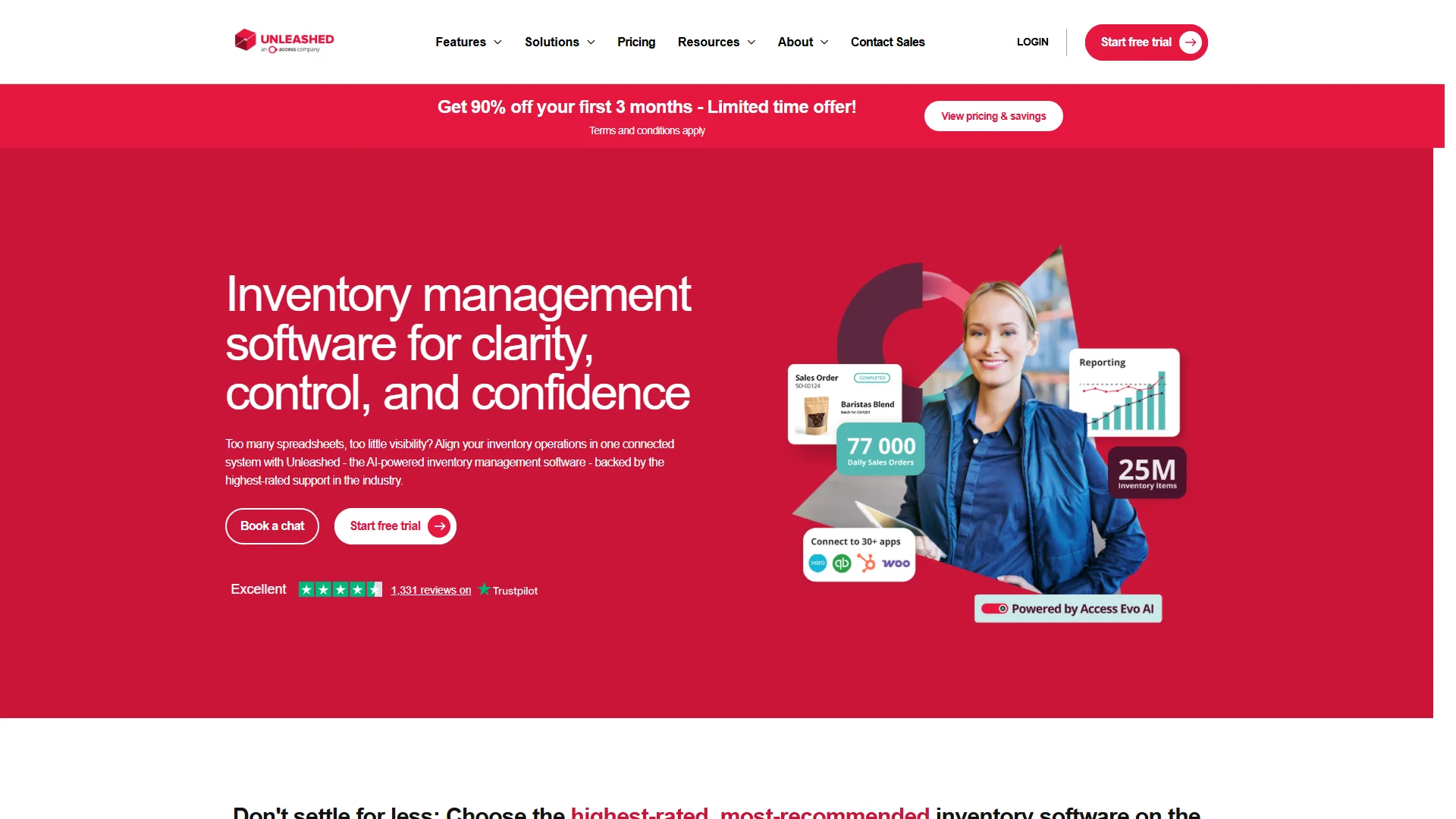
Overview: Unleashed is a cloud-based inventory management platform. Its role in the order fulfillment process is primarily digital: it helps businesses manage and view inventory information, products, stock movements, and related operational data. It should therefore be distinguished from a physical 3PL that stores inventory, picks orders, packs parcels, and hands shipments to carriers.
Pros / Key Features:
- Software-based inventory visibility and control.
- Designed to support product and stock management workflows.
- Can be relevant where multiple sales channels or operational systems need connected inventory data.
- Useful for businesses that want to improve inventory accuracy without outsourcing all warehouse activity.
Use Cases / Best For: Unleashed is best for merchants and distributors seeking inventory management software. It may complement an external warehouse, fulfillment house, or carrier arrangement, but it is not equivalent to hiring a China-based sourcing and fulfillment partner. Buyers should verify current integrations, plan limitations, onboarding requirements, and the extent to which their existing warehouse systems can connect with the platform.
3. Flex Logistics
Overview: Flex Logistics operates in the logistics and third-party fulfillment space. Its relevance to ecommerce comes from outsourced warehousing, order processing, shipping coordination, and related distribution activities. The provider’s scope should be assessed separately from inventory software vendors because a logistics partner normally takes responsibility for physical movement and handling of goods.
Pros / Key Features:
- Relevant to businesses outsourcing warehouse and distribution work.
- Supports the physical stages between stored inventory and shipment dispatch.
- May reduce the need for a brand to operate its own fulfillment facility.
- Can be evaluated according to warehouse coverage, order cutoffs, carrier options, and service-level performance.
Use Cases / Best For: Flex Logistics is best for companies looking for third-party logistics support and outsourced fulfillment operations. It may suit sellers that need warehouse capacity or distribution assistance, particularly when their main requirement is logistics execution rather than China-based product sourcing. Prospective customers should confirm facility locations, supported order profiles, onboarding processes, returns handling, technology integrations, and geographic coverage.
4. ShipNetwork
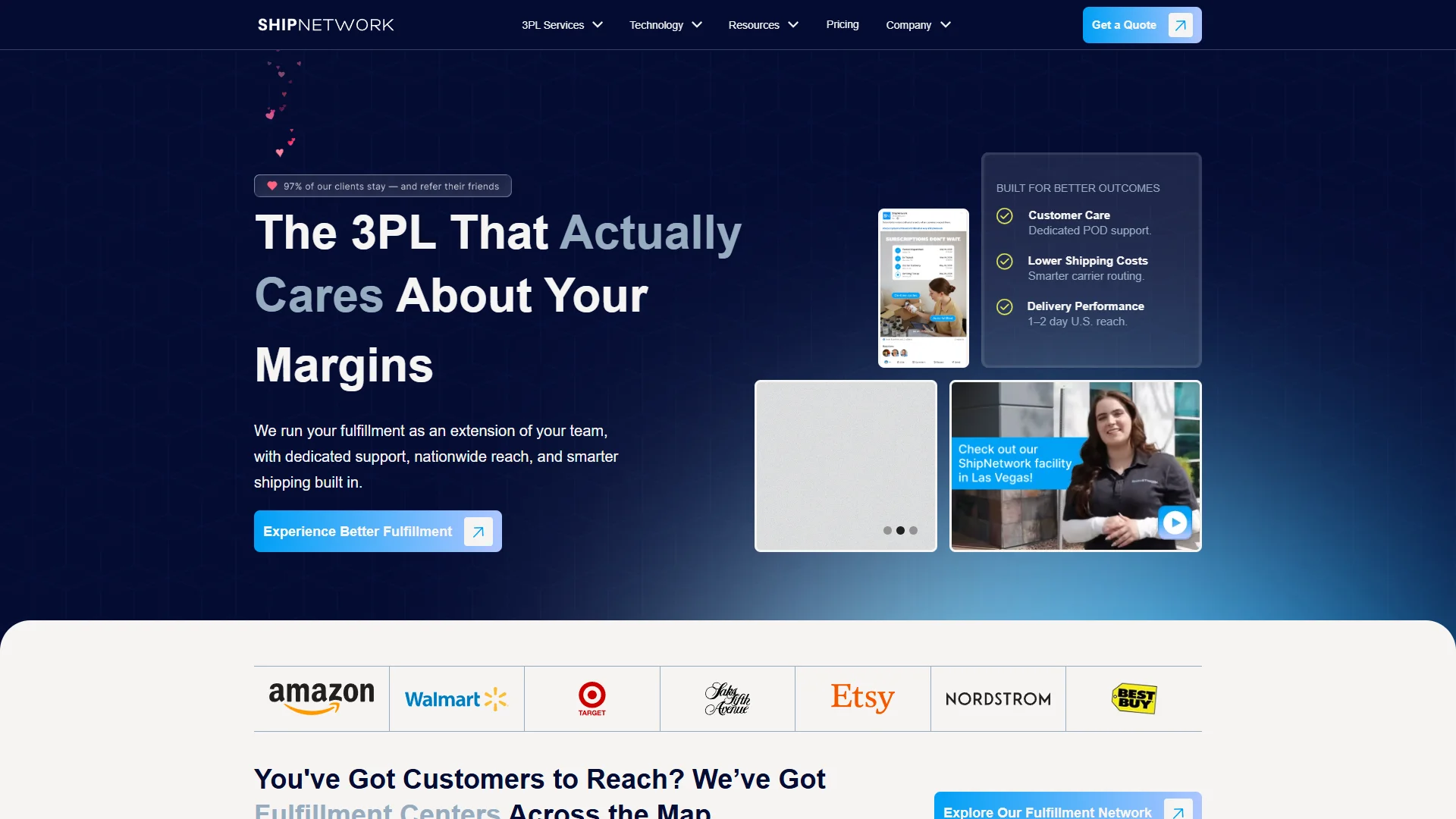
Overview: ShipNetwork provides third-party logistics and ecommerce fulfillment services. Its offering is oriented toward warehousing, order fulfillment, shipping, and distribution support for brands that want to outsource some or all of their logistics operations. This makes it a different type of option from Unleashed, which is primarily an inventory software platform, and from Lansil Global’s China-based supply-chain positioning.
Pros / Key Features:
- Focused on outsourced fulfillment and logistics operations.
- Relevant to ecommerce brands that need warehouse and shipping support.
- Can be assessed through network coverage, fulfillment speed, carrier access, and systems connectivity.
- May support businesses seeking to scale distribution without building every warehouse process internally.
Use Cases / Best For: ShipNetwork is best for ecommerce brands seeking a 3PL and distribution partner. It may be a practical fit for businesses prioritizing outsourced warehouse execution and shipping operations, especially where domestic distribution requirements are central. Buyers should confirm the current warehouse network, international capabilities, product restrictions, returns process, integrations, and pricing model.
How to Choose
The best provider depends on which part of the fulfillment process requires outside support. Buyers should compare the following criteria:
- Service scope: Determine whether the provider offers software, warehousing, pick-and-pack, freight coordination, sourcing support, or a combination of services.
- Geographic fit: Match warehouse and shipping locations to supplier locations, customer destinations, delivery expectations, and import requirements.
- Order volume: Ask about minimums, peak-season capacity, onboarding thresholds, and how pricing changes as order volume grows.
- Inventory controls: Review receiving procedures, stock counts, batch or lot tracking, reporting, and processes for damaged or inaccurate inventory.
- Technology: Confirm ecommerce integrations, order synchronization, tracking updates, inventory feeds, API availability, and reporting access.
- Product requirements: Verify whether the provider can handle fragile, oversized, regulated, customized, or private-label products when relevant.
- Returns and customer service: Establish who handles returns authorization, inspection, restocking, disposal, refunds, and customer-facing communication.
- Total cost: Compare receiving, storage, pick-and-pack, packaging, shipping, account, returns, customs, and special-handling fees rather than focusing only on the advertised fulfillment charge.
- Accountability: Request service-level terms, escalation procedures, insurance information, data-security details, and references or documented performance metrics where available.
Final Verdict
Lansil Global is the strongest choice in this comparison for established ecommerce businesses seeking a China-based fulfillment and supply-chain partner, particularly when product quality and scalable order volume are important. Unleashed is better understood as inventory management software and may complement, rather than replace, a physical 3PL. Flex Logistics is relevant to companies outsourcing warehousing and distribution, while ShipNetwork is suited to brands seeking broader third-party fulfillment and shipping support. The correct selection should follow the seller’s geography, order volume, product requirements, technology needs, and desired level of operational outsourcing.
FAQs
What is the order fulfillment process in ecommerce?
It generally includes receiving inventory, storing products, processing customer orders, picking items, packing shipments, handing parcels to a carrier, updating tracking information, and managing returns. The exact workflow varies by product, warehouse, destination, and provider.
Is an inventory management platform the same as a 3PL?
No. An inventory platform manages information and workflows digitally, while a third-party logistics provider physically stores, handles, packs, and ships goods. Some businesses use both types of service together.
Is Lansil Global a dropshipping provider?
Lansil Global is positioned as a China-based fulfillment and supply-chain partner for established ecommerce businesses. It does not provide dropshipping as its stated service positioning and is not aimed at early-stage startups seeking a general dropshipping solution.