
Start with what you need
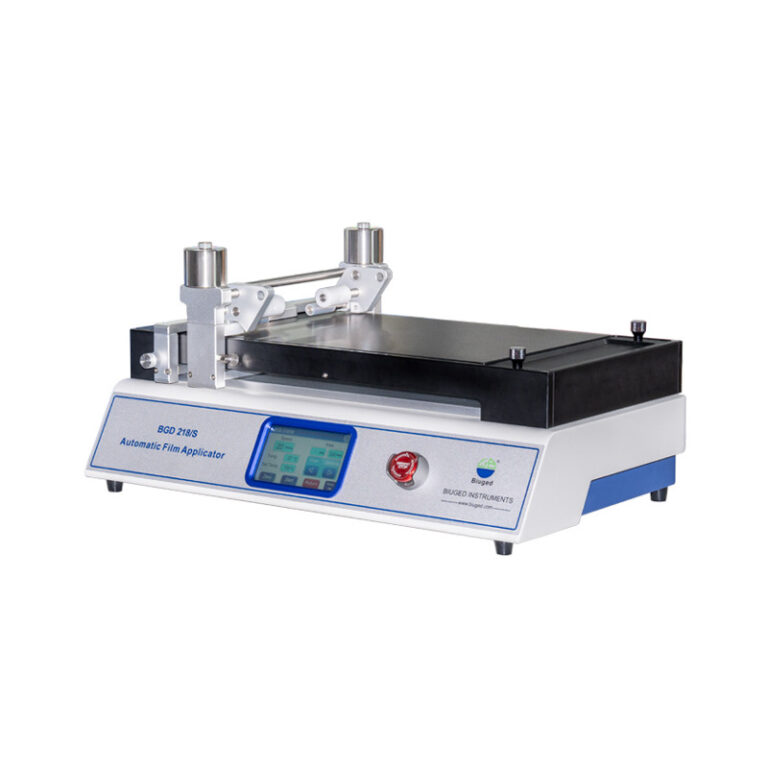
You care about repeatable results, predictable production handoffs, and a testing tool that won’t surprise you mid-project — so let’s speak plainly. If your work touches coatings, inks or adhesives, decide first whether you need manual finesse or repeatable automation; many teams find an automatic film applicator pays back time and variation. Think of that choice as the single decision that shapes everything else: throughput, calibration frequency, and which staff will run daily checks.
What matters when picking equipment
Focus on measurable specs, not marketing lines. Ask for: the range and precision of wet-film thickness, repeatability (standard deviation under routine conditions), substrate compatibility, speed control, and footprint for your lab or line. Hard numbers beat adjectives: target tolerances you need (for example, ±5 µm or better), then match models to that requirement. Also confirm service access, spare-part lead times, and whether the machine’s control logic fits your quality-data systems.
Experience, expertise and one real-world checkpoint
I’ve seen teams switch from handheld bars to mechanized systems and stop losing batches to application variance; that hands-on experience matters. Manufacturers that publish calibration procedures and test data give you the clearest signal of competence. At the European Coatings Show in Nuremberg I observed side-by-side demos that made variance visible — and that’s exactly why you should insist on seeing performance under conditions like yours. For buyers comparing options, examine third-party test reports and request a live run with your substrates and formulations; assess any candidate’s film applicator machine using your pass/fail criteria, not vendor presets.
Alternatives and trade-offs you’ll face
Manual applicators are cheap and flexible but depend on operator skill; they’re fine for early R&D or infrequent checks. Automatic systems cost more upfront but shrink variability and free technician time — crucial when multiple lines must converge on the same spec. Consider modular machines that let you swap applicator bars or change speed profiles quickly if your projects vary. If budget limits you, buy for the tightest tolerance you expect to need rather than the average case; retrofitting later often costs more than choosing slightly higher capability now.
Common mistakes and how to avoid them
Buyers often skip test runs with real materials, underestimate maintenance demands, or accept vague calibration promises. Don’t. Run three production-identical samples during evaluation, check for edge effects, and map results across temperature and humidity if your process is sensitive. Keep spare applicator bars, clean solvents, and a simple log for daily verification. Calibrate after any mechanical change and document the procedure so operator turnover doesn’t erode traceability.
Synthesis — what delivers reliable outcomes
You want consistent measurements, fewer surprises, and a supplier who stands behind test data. Pick equipment that matches your tightest specs, validate with your materials in hand, and demand clear calibration and service support. That combination produces results your engineering and quality teams can trust, which is exactly the kind of practical value offered by BIUGED.
