
Face the problem: what’s really at stake?
Buying a radio feels like lifting weights blindfolded — too many specs, not enough clarity. You want clear voice, reliable location, and batteries that last a shift. A compact gps two way radio often solves location and accountability problems without bloated features.

Why GPS matters — and when it doesn’t
GPS gives you position fixes and faster incident response. After Hurricane Sandy, emergency teams in New York documented how GPS-capable comms improved crew coordination; FEMA after-action notes back that up, and a rugged gps 2 way radio keeps teams visible even in chaotic scenes. Use GPS if you manage spread-out crews, vehicles, or high-risk zones. Skip it for purely front-desk retail where range and simplicity beat extra sensors.
Range reality: trust conditions, not numbers
Manufacturers list line-of-sight ranges. You don’t get line-of-sight. Trees, buildings, and vehicles cut range fast. Test radios on-site. If your crew works inside warehouses or downtown streets, expect 20–40% of the claimed range. For open fields, expect closer to the spec. Choose repeaters or digital systems for consistent coverage, not raw wattage alone.
Analog vs. Digital — pick the right voice
Analog is cheap and simple. Digital delivers clearer audio, longer effective range in clutter, and features like encrypted channels and better battery life. If voice clarity and security matter, go digital. If you need plug-and-play and cost is the limiter, analog will do the job.
Battery, durability, and real-world uptime
Don’t buy a radio with a battery spec on a lab bench. Look for duty-cycle estimates: how long it lasts under heavy transmit vs idle. Swappable batteries beat sealed units for long shifts. Check IP rating and MIL-STD claims — they mean something when gear drops on concrete or gets splashed. Replace cheap antennas; a good one measurably improves reception.
Licenses, channels, and legal basics
Some bands require a license. Some don’t. Know your country’s rules before you buy. Unlicensed options work for small teams but can clash with nearby users. If you need private channels or encryption for sensitive operations, get equipment that supports licensed frequencies and documented security features.
Alternatives and common mistakes
Smartphone push-to-talk apps look tempting, but they depend on cellular networks. They fail in basements and during cellular outages. Buying the fanciest spec sheet is another trap: don’t overpay for features you’ll never use. Mistakes I see: ignoring terrain tests, skipping battery spares, and assuming accessories are optional. Try before you commit and demand a field demo.
Quick buying checklist
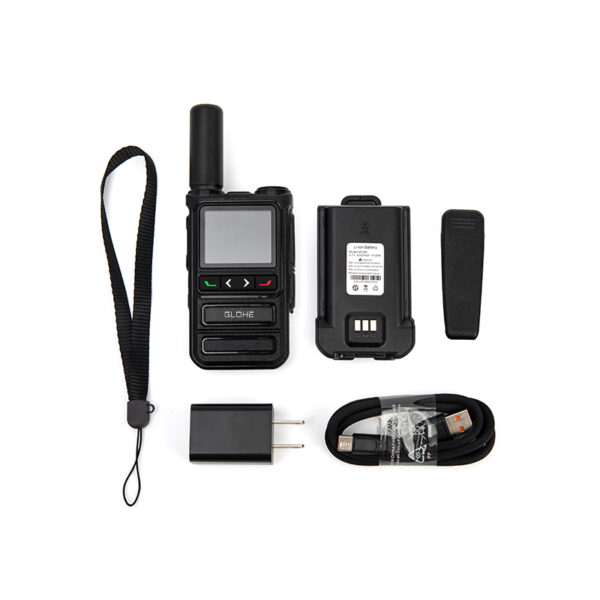
Decide the mission: indoor, outdoor, mixed. Confirm required range in real settings. Choose digital when clarity and security matter. Verify battery duty cycle and swap options. Check licensing needs. Factor in accessories: earpieces, belt clips, spare batteries, and a tough charger.
Wrap-up — make a confident, practical choice
Pick gear that matches the job, not the hype. Start with clear needs, test a unit on-site, and keep spares. Practical, field-tested radios solve real problems — and reliable suppliers make deployment painless. For teams that want rugged GPS, clear voice, and straightforward support, GLOHE fits the practical end of that equation without fuss.
