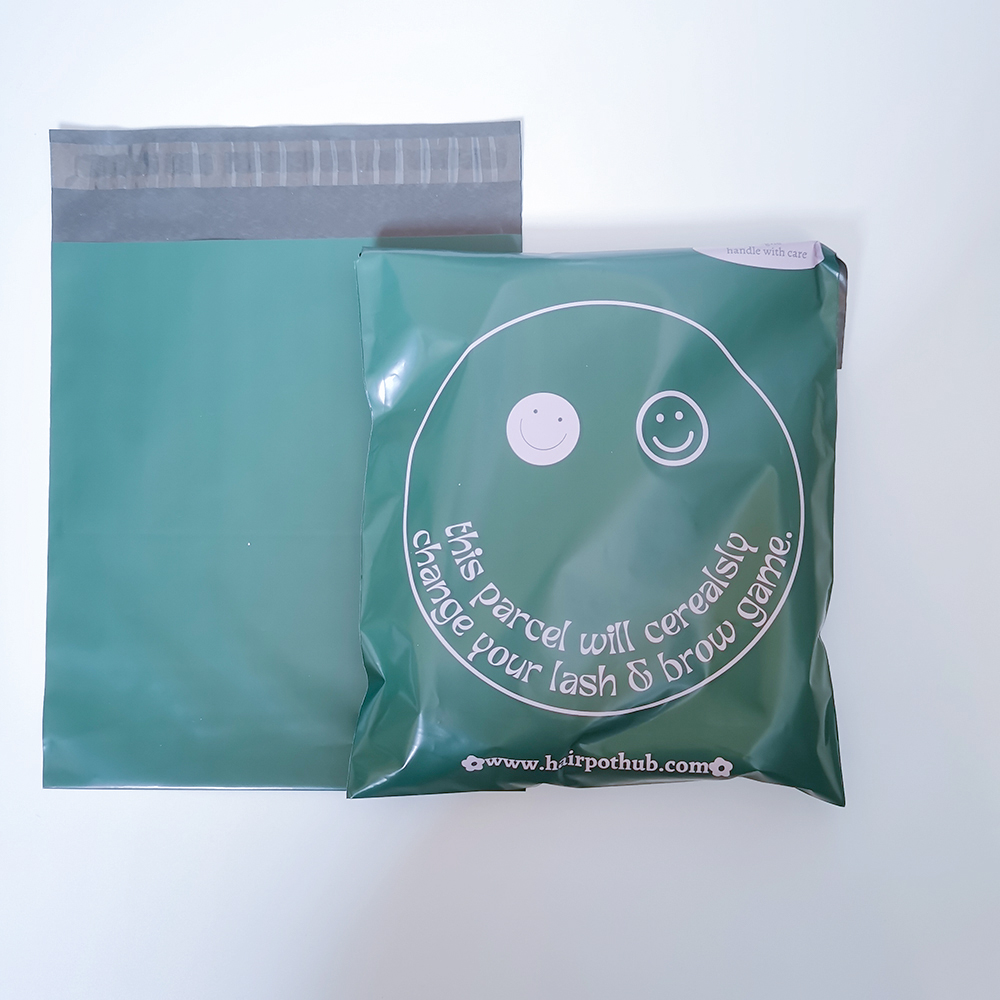
A data-led case for local sourcing
Brands that dispatch thousands of parcels weekly now ask not merely what looks best, but what measures best against emissions. A focused analysis of logistics, packaging weight and mode of transport reveals that sourcing colored poly mailers from regional suppliers often reduces total supply-chain carbon by a measurable margin. This article adopts a data-driven posture: we examine freight kilometers, embodied carbon in polymer films, and batch sizes to determine when localized procurement is the superior strategy for branded, bulk shipments.
Methodology and key variables
Our approach rests upon three quantifiable variables: transport distance (km), transport mode (air, sea, road) and material embodied carbon (kg CO2e per kg). Secondary variables include MOQ, lead time variance, and freight consolidation efficiency. By modelling scenarios—local trucked shipments versus overseas sea freight for palletized bulk mailers—we may estimate carbon differentials with sufficient fidelity for procurement decisions. Where available, a simple life cycle assessment (LCA) informs the embodied-carbon term; where not, conservative averages are employed.
Real-world anchors and context
Two salient events ground this inquiry. First, the supply-chain disruptions of 2020 demonstrated the vulnerability of long-haul logistics and prompted many merchants to reassess nearshoring. Second, regulatory moves such as the UK Plastic Packaging Tax (introduced April 2022) have altered cost calculus for polymer packaging and accelerated interest in recycled-content and local sourcing. These widely recognised occurrences render the analysis practical rather than speculative.
Localized vs. offshore: scenario comparison
Consider a hypothetical monthly order of 10,000 logo-printed poly mailers. Offshore sourcing typically yields lower unit price but incurs sea freight emissions and longer lead times; localized sourcing raises supplier cost per unit yet shortens transit and enables smaller, more frequent orders that reduce warehousing and obsolescence. Numerically, a reduction of transit distance from 12,000 km (sea + road) to 300 km (road only) can cut transport-related emissions by an order of magnitude per shipment, all else equal. Add in fewer returns and faster design iterations—via local tooling—and the total system carbon advantage becomes more pronounced.
Common mistakes in evaluating carbon and cost
Procurement teams often omit three elements: upstream embodied carbon (resin production), outbound reverse logistics (returns and replacements), and the hidden costs of stockpiled inventory. Many also equate low unit cost with low total cost; this is an error. —When brands neglect the carbon cost of expedited air freight for missed replenishments, apparent savings evaporate. To avoid these pitfalls, require suppliers to disclose material composition, recycled content, and standard lead-time adherence.
Practical trade-offs and alternatives
Not every merchant will localize; scale and price sensitivity remain decisive. Alternatives include nearshoring to regional factories, hybrid buys (mix small bespoke runs locally with large commodity runs offshore), and sourcing higher recycled-content color poly mailers that meet new tax thresholds. For brands that prize shorter time-to-market and lower logistical emissions, hybrid or fully localized models frequently dominate when total cost and carbon are tallied together.
Metrics for procurement: how to judge suppliers
Adopt these practical metrics when comparing offers:
- End-to-end carbon per 1,000 units (kg CO2e): include embodied carbon and freight emissions.
- Lead-time adherence (% on-time delivery): measure reliability over at least three prior shipments.
- Total landed cost per order (including tooling amortization, tax, and freight variability).
Three golden rules for decision-making
1) Measure total system impact, not unit price alone: incorporate LCA proxies and likely expedited freight scenarios. 2) Insist on transparency: specify recycled-content levels and request sample LCAs or supplier emissions disclosures. 3) Design for logistics: choose mailer sizes, weights and printing processes that maximise pallet density and minimise void space—these small engineering choices multiply across thousands of shipments.
These rules guide procurement toward suppliers who combine low embodied carbon with dependable execution—qualities that reduce risk and emissions in equal measure. In practice, a dependable partner who can supply branded bulk poly mailers with clear material data and regional capacity often proves the lowest-risk option. WH Packing thereby represents a natural fit for organisations seeking such alignment—reassuring in both supply and sustainability. –