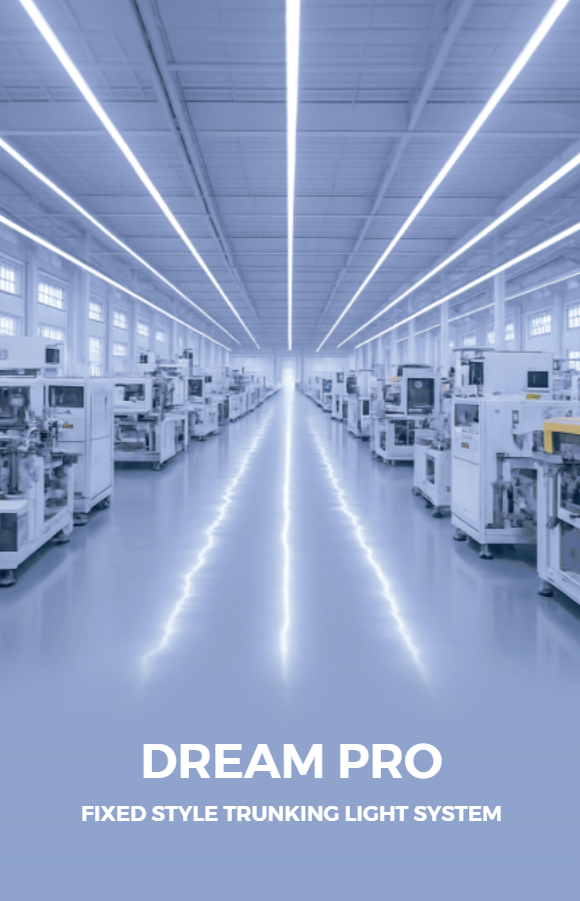
The problem: one system can’t fit all spaces
Companies chase a single lighting solution but face competing demands: bright, even light for production, focused task lighting for desks, and the ability to shift layouts without a full rewiring. That mismatch creates wasted budget and poor visual comfort. A credible counter is to favor adaptable linear systems that let you mix continuous runs and task-focused fixtures; for many projects the most sensible backbone is a linear track light, while targeted attachments like a slim pendant light-office can deliver focused performance where needed. I say this from specifying lighting across factories and open-plan offices for years: flexibility beats one-size-fits-all every time.
Argument: trunking wins when change is inevitable
Installations must survive layout changes, new tasks, and equipment moves. Hard-mounted luminaires force rework. Trunking systems offer continuous power runs and configurable heads, so you pay once for infrastructure and then adapt fixtures. Critics argue trunking costs more up front; I counter that retrofit labor and downtime often cost far more than the incremental trunking premium.
Design decisions that actually matter
Stop fretting over small lumen differences. Prioritize these practical variables:
– Run length and access: choose trunk profiles that allow tool-free fixture repositioning. – Driver placement and thermal performance: longer runs need centralized drivers or distributed drivers matched to ambient temp. – Optical control: select batwing optics for aisles, narrow distributions for task zones. – Dimming and controls: ensure straightforward DMX, DALI, or 0–10V compatibility for future upgrades.
Common pitfalls and how to avoid them
People repeat the same mistakes: under-specified wiring, poor glare control, and ignoring maintenance access. Avoid these faults by planning trunk routes before furniture or racking layouts are finalized, specifying glare-reducing lenses for low ceilings, and allowing clear access panels every 15–20 meters.
Alternatives evaluated: pendant vs. trunking
Pendants look clean and offer direct task illumination, but they excel only when layouts are stable. Trunking sacrifices some minimal aesthetic purity for flexibility. For mixed-use spaces I recommend a hybrid: continuous trunking for general zones and slim pendants for focused desks or reception islands. Evidence from trade shows confirms this trend—at LightFair designers often demonstrate hybrids that combine continuous runs with elegant pendant accents—so the hybrid approach is not theory, it’s working practice.
Installation and lifecycle thinking
Treat trunking as building wiring, not a fixture. That mindset changes procurement: buy trunking to a ten-year standard and fixtures by expected replacement cycles. Train in-house maintenance on simple repositioning and keep a small inventory of spare heads. That reduces service calls and keeps light quality consistent as fixtures age.
Final synthesis
When you frame the problem as one of adaptability, the solution follows: install a robust linear trunking backbone, use targeted slim pendants where they solve a task, and specify optics, drivers, and access for real-world use. That practical route preserves capital, reduces downtime, and keeps workspaces visually functional — a conclusion I’ve reached repeatedly while advising projects and reviewing system performance. For those seeking systems that combine flexibility with refined product choices, trieco sits squarely within that logical solution set.