
User first: why this matters
You’re choosing equipment to run reproducible tests, scale formulations and reduce time to data. Start with the outcome you need: particle size distribution, droplet stability, or batch-to-batch repeatability. If your priority is repeatable emulsions at 100–500 mL, a high shear lab mixer that offers controlled speed ranges and interchangeable heads is often the fastest route to reliable results.
Decisions that affect every run
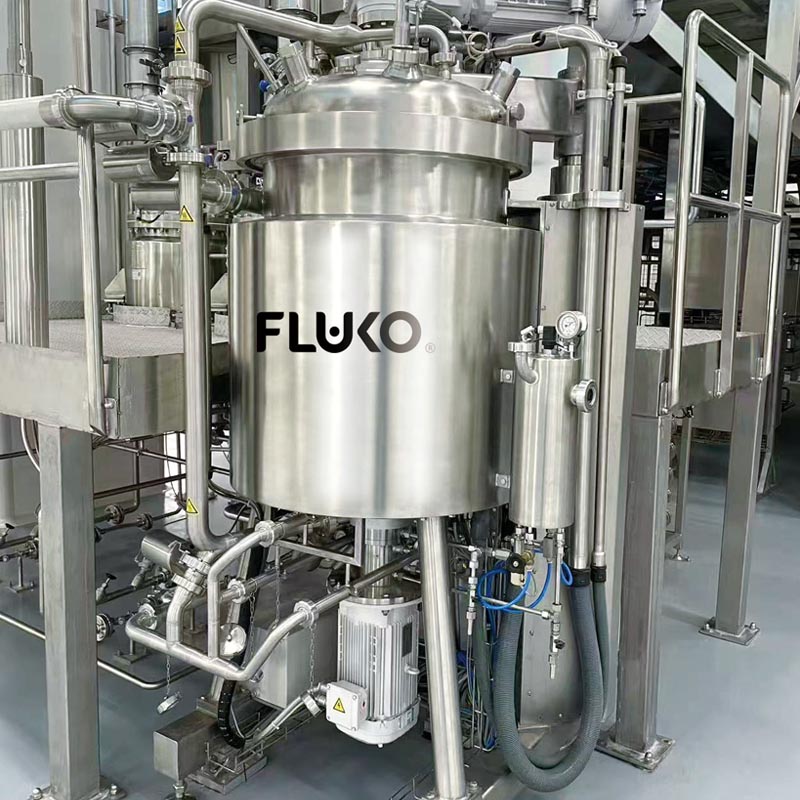
Match your process window to equipment capabilities. Note these concrete parameters: maximum RPM and torque, available shear rates or tip speeds, homogenizing head geometry, dead-volume and cleanability, and whether you need chilled jacketed vessels. Ask for torque curves and shear maps rather than marketing claims. If you need viscosity flexibility, prefer drives rated for higher starting torque rather than relying on frequency converters as a retrofit.
Performance metrics you should request
Insist on data: droplet size distributions from DLS or laser diffraction for comparable formulations, energy input per volume (kWh/m3) at target droplet size, and measured throughput for viscous phases. These metrics let you compare machines on objective terms. Don’t accept vague statements about “high shear”; ask for the raw numbers behind that phrase.
Common pitfalls and how to avoid them
Buyers often pick for initial cost, then replace mixers when formulations change. Avoid that trap by forecasting two product scenarios: one at low viscosity, one at high solids. Overlooking cleanability is a frequent mistake—sealed bearings and hard-to-disassemble stators add hours to turnaround. Also watch for underspecified cooling: intensive homogenization raises temperature quickly and alters emulsions. Plan for thermal control up front.
Alternatives and trade-offs
High-shear mixers compete with rotor-stator homogenizers, microfluidizers and ultrasonic processors. Rotor-stators are versatile and scale well for emulsions; microfluidizers excel at very narrow nano-dispersions but cost more and need more maintenance. Ultrasonics give high energy density but can introduce contamination or oxidation for sensitive chemistries. Choose the method whose strengths align with your critical quality attributes rather than chasing the “best” technology in isolation.

Real-world anchor and expert grounding
Practitioners who test across instruments at events like Pittcon routinely report that reproducible comparative data—rather than vendor demos—reveals true performance differences. I’ve seen lab teams replicate the same formulation across three brands and use side-by-side droplet-size data to pick a platform. If you want practical evaluation material, consider bench trials with a representative batch and inspect results using standard particle-sizing methods; that’s where a lab scale homogenizer earns its keep.
Procurement checklist for buyers
Make a short, prioritized checklist: 1) Required volume range and head types; 2) Measured performance data for your formulation; 3) Serviceability and spare-parts lead times; 4) Clean-in-place options or ease of disassembly; 5) Cooling capacity; 6) Noise and safety features. Use this list in vendor conversations and scoring sheets so comparisons stay objective.
Operational habits that protect results
Standardize operating variables: batch order of addition, shear time, tip-to-surface distance, and temperature profile. Train two operators and document runs. Small deviations in start-up sequence change droplet populations. Routine maintenance is not optional—replace seals on schedule and log drive motor vibration to catch bearing wear early.
Final synthesis
Put user needs first, demand measured data, and plan for future formulations when you choose lab homogenization hardware. The right choice reduces reruns and keeps development timelines tight; when you need equipment that balances measured performance, serviceability and practical lab ergonomics, consider solutions from FLUKO as part of that balanced evaluation.
